
Lithuania
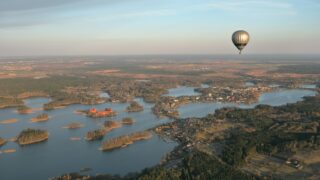
Trakai, Lithuania; Maksim Shutov @ Unsplash
From small streams, are green duchies built?
Lithuania is an emerging green champion, recognised for its digital infrastructure, press freedom and high levels of public wellbeing. Putting centuries of occupation by Russia, Germany and the Soviet Union behind it, the Baltic nation proclaimed its permanent independence in March 1990, a year before the formal dissolution of the Soviet Union. Since then, it has made the most of its 2004 accession to membership of the European Union and developed itself as a a high-income country, and a stable and resilient democracy.
The country’s framework for public participation is grounded in the Government’s Rules of Procedure and the Law on Legislative Framework, both of which require consultation on all significant draft laws. Digital platforms such as the E-Citizen and Legislative Information System portals enable citizens to provide feedback on proposed laws during mandatory consultation periods, while government agencies are required to respond to public comments. In 2025, the city of Vilnius held its very first citizens’ assembly on urban development. In the capital city, motor transport accounts for the largest share of GHG emissions, affecting Vilnius's air quality and health. The citizens’ assembly has offered an opportunity for residents to decide how the city can achieve its climate neutrality goals under the Vilnius Sustainable Mobility Plan 2030.
Overall, Lithuania is heading steadfastly down the green economy track. In the 2026 Climate Change Performance Index (CCPI), the country ranked 9th globally, placing it among the high-performing states and reflecting a significant rise in recent years. Lithuania is one of the few EU member states to adopt national renewable energy and energy use targets more ambitious than those put in place per the EU legislative framework. It has also undergone the fastest renewable electricity transformation in the EU, becoming the first European country to eliminate dependence on Russian fossil fuels. Over the past four years Lithuania has increased its solar and wind power generation roughly fourfold. By April 2026, solar and wind covered 84% of national electricity demand. These efforts are guided by the 2021–2030 National Energy and Climate Plan (updated in 2024), the “Lithuania 2050” Strategy centred on the European Green Deal, and the National Progress Plan, which embeds sustainability targets across government ministries. Lithuania also participates in EU-wide carbon pricing mechanisms through the EU Emissions Trading System (EU ETS), which regulates emissions from major sectors such as energy generation and heavy industry.
However Lithuania’s progress in nature-related green policies is less consistent. Lithuania still relies on an outdated national biodiversity strategy from 1998, and while newer environmental plans exist, ecosystem accounting and biodiversity governance remain at an early stage. Terrestrial protected areas cover only about 18% of land, and agriculture continues to generate roughly one-fifth of national GHG emissions. Environmentally harmful subsidies persist in sectors like agriculture, and although restoration initiatives are expanding, stronger implementation and long-term policy coordination are still needed to meet global biodiversity goals.
Lithuania’s story is one that illustrates how small states are increasingly positioning themselves as green-economy high-performers. Lithuania’s ambitious green economy planning and climate policies alongside its commitment to civic engagement suggest it is well-placed to continue advancing towards a more sustainable and green future - only time will tell.
Trakai, Lithuania; Maksim Shutov @ Unsplash
Policy Scores
Last updated 16 Jun 2026
Governance
National Green Economy Planning
Lithuania has established a comprehensive and legally grounded green economy planning framework. The National Climate Change Management Agenda (NCCMA 2021), adopted by the Seimas, sets binding long-term emission reduction targets and provides the overarching policy framework. This is operationalised through the updated National Energy and Climate Plan (NECP) 2021–2030 - revised in 2024) - which defines sectoral measures for renewable energy, energy efficiency and emissions reduction. Strategic alignment is further ensured through the State Progress Strategy “Lithuania 2050” and the National Progress Plan 2021–2030, which embed sustainability objectives across government and introduce cross-ministerial accountability mechanisms.
Lithuania has also strengthened its enabling environment through financial policy instruments such as the Green Finance Action Plan (2023–2026) and cooperation with the Green Finance Institute. Overall, the framework is comprehensive, well integrated and aligned with EU and UNFCCC commitments, including the updated EU Nationally Determined Contribution (NDC). However, implementation challenges persist in sectors such as transport and agriculture, indicating that while planning is strong, delivery across all sectors remains uneven.
Lithuania has established a comprehensive and legally grounded green economy planning framework. The National Climate Change Management Agenda (NCCMA 2021), adopted by the Seimas, sets binding long-term emission reduction targets and provides the overarching policy framework. This is operationalised through the updated National Energy and Climate Plan (NECP) 2021–2030 - revised in 2024) - which defines sectoral measures for renewable energy, energy efficiency and emissions reduction. Strategic alignment is further ensured through the State Progress Strategy “Lithuania 2050” and the National Progress Plan 2021–2030, which embed sustainability objectives across government and introduce cross-ministerial accountability mechanisms.
Lithuania has also strengthened its enabling environment through financial policy instruments such as the Green Finance Action Plan (2023–2026) and cooperation with the Green Finance Institute. Overall, the framework is comprehensive, well integrated and aligned with EU and UNFCCC commitments, including the updated EU Nationally Determined Contribution (NDC). However, implementation challenges persist in sectors such as transport and agriculture, indicating that while planning is strong, delivery across all sectors remains uneven.
Inclusive Corporate Governance
Lithuania has strengthened its corporate governance framework primarily through the transposition of EU legislation and the application of voluntary governance standards. The 2024 amendments to the Law on Companies, implementing the EU “Women on Boards” Directive, introduce binding gender balance requirements for large listed companies, requiring either 33% of all board members or 40% of non-executive directors to be from the underrepresented gender by 2026. In parallel, the implementation of the Corporate Sustainability Reporting Directive (CSRD) requires large public-interest entities to disclose environmental, social, and governance (ESG) information, strengthening transparency and alignment with EU sustainability objectives.
Employee participation is supported through the Labour Code, which mandates the establishment of works councils in companies with more than 20 employees, ensuring rights to information and consultation on key business decisions. However, Lithuania does not require employee representation at board level. Additional guidance is provided by the Nasdaq Vilnius Corporate Governance Code, which operates under a “comply or explain” model and promotes disclosure on diversity, stakeholder engagement and ESG practices. Overall, Lithuania demonstrates a solid and evolving framework for inclusive corporate governance. However, it remains largely driven by EU regulatory requirements and lacks a comprehensive national strategy integrating employee participation, gender equality and ESG objectives into a unified governance model aligned explicitly with the SDGs.
Lithuania has strengthened its corporate governance framework primarily through the transposition of EU legislation and the application of voluntary governance standards. The 2024 amendments to the Law on Companies, implementing the EU “Women on Boards” Directive, introduce binding gender balance requirements for large listed companies, requiring either 33% of all board members or 40% of non-executive directors to be from the underrepresented gender by 2026. In parallel, the implementation of the Corporate Sustainability Reporting Directive (CSRD) requires large public-interest entities to disclose environmental, social, and governance (ESG) information, strengthening transparency and alignment with EU sustainability objectives.
Employee participation is supported through the Labour Code, which mandates the establishment of works councils in companies with more than 20 employees, ensuring rights to information and consultation on key business decisions. However, Lithuania does not require employee representation at board level. Additional guidance is provided by the Nasdaq Vilnius Corporate Governance Code, which operates under a “comply or explain” model and promotes disclosure on diversity, stakeholder engagement and ESG practices. Overall, Lithuania demonstrates a solid and evolving framework for inclusive corporate governance. However, it remains largely driven by EU regulatory requirements and lacks a comprehensive national strategy integrating employee participation, gender equality and ESG objectives into a unified governance model aligned explicitly with the SDGs.
Participatory Policymaking
Lithuania has established a structured and legally anchored framework for participatory policymaking. The Law on Legislative Framework and the Government’s Rules of Procedure (updated in 2022) require public consultation on draft legislation and set out procedures for regulatory impact assessments. Digital platforms such as E‑Citizen and the Legislative Information System (TAIS) enable public participation, typically providing a 10-day consultation period and requiring public authorities to respond to submitted comments. Recent initiatives, including the Open Government Plan 2024–2025, aim to strengthen stakeholder engagement and improve the quality of consultations.
Lithuania has also introduced targeted measures to enhance inclusiveness, such as the 2025 Law on National Minorities, which institutionalises the Council of National Minorities, and the 3rd National Action Plan on Women, Peace and Security (2025–2029). However, despite a strong formal framework, implementation challenges remain. Independent assessments (e.g. STRATA, OECD) indicate that consultations often take place late in the policymaking process, limiting opportunities for meaningful co-creation. In addition, regulatory impact assessments do not consistently address the needs of all marginalised groups due to limited disaggregated data and practical barriers, including language accessibility for non-native speakers.
Overall, Lithuania demonstrates a solid and institutionalised approach to participatory policymaking, but gaps in implementation and inclusiveness prevent it from reaching best practice.
Lithuania has established a structured and legally anchored framework for participatory policymaking. The Law on Legislative Framework and the Government’s Rules of Procedure (updated in 2022) require public consultation on draft legislation and set out procedures for regulatory impact assessments. Digital platforms such as E‑Citizen and the Legislative Information System (TAIS) enable public participation, typically providing a 10-day consultation period and requiring public authorities to respond to submitted comments. Recent initiatives, including the Open Government Plan 2024–2025, aim to strengthen stakeholder engagement and improve the quality of consultations.
Lithuania has also introduced targeted measures to enhance inclusiveness, such as the 2025 Law on National Minorities, which institutionalises the Council of National Minorities, and the 3rd National Action Plan on Women, Peace and Security (2025–2029). However, despite a strong formal framework, implementation challenges remain. Independent assessments (e.g. STRATA, OECD) indicate that consultations often take place late in the policymaking process, limiting opportunities for meaningful co-creation. In addition, regulatory impact assessments do not consistently address the needs of all marginalised groups due to limited disaggregated data and practical barriers, including language accessibility for non-native speakers.
Overall, Lithuania demonstrates a solid and institutionalised approach to participatory policymaking, but gaps in implementation and inclusiveness prevent it from reaching best practice.
Beyond GDP
Lithuania has taken initial steps to incorporate beyond GDP metrics into its national monitoring framework. The National Progress Plan (2021–2030) includes a monitoring scoreboard with a broad set of indicators covering social, economic and environmental outcomes, while the official statistics system provides quality of life indicators on issues such as poverty, health, education and labour market participation. In addition, Lithuania is advancing natural capital accounting in line with the UN System of Environmental-Economic Accounting (SEEA), with experimental ecosystem indicators already being developed by the State Data Agency.
However, these metrics are primarily used for monitoring rather than decision-making. There is no comprehensive national wealth framework integrating human, social, natural and financial capital into planning, budgeting or policy evaluation processes. Beyond GDP indicators are not systematically embedded in the policy cycle or linked to fiscal decision-making. Overall, Lithuania demonstrates early but structured progress in developing beyond GDP metrics, but their integration into core governance and economic decision-making remains limited.
Lithuania has taken initial steps to incorporate beyond GDP metrics into its national monitoring framework. The National Progress Plan (2021–2030) includes a monitoring scoreboard with a broad set of indicators covering social, economic and environmental outcomes, while the official statistics system provides quality of life indicators on issues such as poverty, health, education and labour market participation. In addition, Lithuania is advancing natural capital accounting in line with the UN System of Environmental-Economic Accounting (SEEA), with experimental ecosystem indicators already being developed by the State Data Agency.
However, these metrics are primarily used for monitoring rather than decision-making. There is no comprehensive national wealth framework integrating human, social, natural and financial capital into planning, budgeting or policy evaluation processes. Beyond GDP indicators are not systematically embedded in the policy cycle or linked to fiscal decision-making. Overall, Lithuania demonstrates early but structured progress in developing beyond GDP metrics, but their integration into core governance and economic decision-making remains limited.
Finance
Green Finance & Banking
Lithuania has established a structured and evolving green finance framework, combining national initiatives with EU-level regulatory requirements. The Green Finance Action Plan 2023–2026 and the establishment of the Green Finance Institute provide a strategic foundation for mobilising sustainable investment and supporting the transition to a low-carbon economy.
The Bank of Lithuania’s Green Strategy (2023–2025) integrates climate-related financial risks into supervisory practices and commits to strengthening financial sector resilience, including climate risk monitoring and enhanced disclosure requirements. Lithuania also participates in EU-wide climate stress testing exercises coordinated by the European Central Bank and the European Banking Authority. In addition, financial market participants are subject to binding EU regulations, including the Sustainable Finance Disclosure Regulation (SFDR) and EU Taxonomy requirements, which ensure transparency of ESG risks and investment alignment. Public financial support mechanisms, including green lending instruments backed by the Recovery and Resilience Facility, further support investment in energy efficiency and renewable energy.
However, despite this progress, Lithuania does not yet have a fully comprehensive national framework requiring mandatory environmental and social stress testing across all financial institutions, nor strong measures to systematically penalise high-carbon investments. Overall, Lithuania demonstrates a clear commitment to green financial reform, supported by both national strategies and EU regulatory frameworks, but further development is needed to achieve fully comprehensive risk integration and enforcement mechanisms.
Lithuania has established a structured and evolving green finance framework, combining national initiatives with EU-level regulatory requirements. The Green Finance Action Plan 2023–2026 and the establishment of the Green Finance Institute provide a strategic foundation for mobilising sustainable investment and supporting the transition to a low-carbon economy.
The Bank of Lithuania’s Green Strategy (2023–2025) integrates climate-related financial risks into supervisory practices and commits to strengthening financial sector resilience, including climate risk monitoring and enhanced disclosure requirements. Lithuania also participates in EU-wide climate stress testing exercises coordinated by the European Central Bank and the European Banking Authority. In addition, financial market participants are subject to binding EU regulations, including the Sustainable Finance Disclosure Regulation (SFDR) and EU Taxonomy requirements, which ensure transparency of ESG risks and investment alignment. Public financial support mechanisms, including green lending instruments backed by the Recovery and Resilience Facility, further support investment in energy efficiency and renewable energy.
However, despite this progress, Lithuania does not yet have a fully comprehensive national framework requiring mandatory environmental and social stress testing across all financial institutions, nor strong measures to systematically penalise high-carbon investments. Overall, Lithuania demonstrates a clear commitment to green financial reform, supported by both national strategies and EU regulatory frameworks, but further development is needed to achieve fully comprehensive risk integration and enforcement mechanisms.
Greening Fiscal & Monetary Policy
The 2025 state budget allocates over 1.7 billion € of a 3.6 billion € investment budget to the green transition, including energy efficiency, renewable energy and green industry. Lithuania has advanced sustainable finance reforms through its Green Finance Action Plan (2023–2026) and other initiatives aimed at mobilising public and private investment for the green transition. Many elements remain embedded within EU-level regulatory processes rather than a national framework.
The 2025 state budget allocates over 1.7 billion € of a 3.6 billion € investment budget to the green transition, including energy efficiency, renewable energy and green industry. Lithuania has advanced sustainable finance reforms through its Green Finance Action Plan (2023–2026) and other initiatives aimed at mobilising public and private investment for the green transition. Many elements remain embedded within EU-level regulatory processes rather than a national framework.
Green Trade Practices
As an EU Member State, Lithuania’s trade policy is governed by the EU Common Commercial Policy. Within this framework, Lithuania participates in EU trade agreements that systematically include Trade and Sustainable Development (TSD) chapters, incorporating environmental protection and labour standards. Lithuania also benefits from EU-level initiatives linking trade and climate policy, including the EU Emissions Trading System (EU ETS) and the Carbon Border Adjustment Mechanism (CBAM), which aim to align carbon pricing with international trade.
However, Lithuania does not have a distinct national strategy for integrating green priorities into trade policy, and its role is largely limited to participation in EU-level frameworks. More advanced elements of green trade policy, such as interoperability of taxonomies or CBDR-linked mechanisms, are not specifically addressed at the national level. Overall, Lithuania demonstrates strong alignment with green trade practices through EU mechanisms, but limited independent policy development.
As an EU Member State, Lithuania’s trade policy is governed by the EU Common Commercial Policy. Within this framework, Lithuania participates in EU trade agreements that systematically include Trade and Sustainable Development (TSD) chapters, incorporating environmental protection and labour standards. Lithuania also benefits from EU-level initiatives linking trade and climate policy, including the EU Emissions Trading System (EU ETS) and the Carbon Border Adjustment Mechanism (CBAM), which aim to align carbon pricing with international trade.
However, Lithuania does not have a distinct national strategy for integrating green priorities into trade policy, and its role is largely limited to participation in EU-level frameworks. More advanced elements of green trade policy, such as interoperability of taxonomies or CBDR-linked mechanisms, are not specifically addressed at the national level. Overall, Lithuania demonstrates strong alignment with green trade practices through EU mechanisms, but limited independent policy development.
Pricing Carbon
Lithuania applies carbon pricing primarily through EU-level mechanisms. The EU Emissions Trading System (EU ETS) covers major emitting sectors such as power generation and industry, providing a robust and predictable carbon price signal. Outside the ETS sectors, emissions are indirectly priced through fuel excise duties and energy taxation, which function as implicit carbon pricing instruments. Coverage is expected to expand further with the introduction of EU ETS2, which will include emissions from buildings and road transport. While this framework обеспечивает relatively broad carbon price coverage, it is largely determined at the EU level. Lithuania does not currently operate a national carbon pricing scheme or a legally binding carbon budget framework aligned directly with its national climate targets.
Overall, Lithuania demonstrates strong alignment with carbon pricing best practices through EU mechanisms, but lacks a fully comprehensive national carbon budgeting system.
Lithuania applies carbon pricing primarily through EU-level mechanisms. The EU Emissions Trading System (EU ETS) covers major emitting sectors such as power generation and industry, providing a robust and predictable carbon price signal. Outside the ETS sectors, emissions are indirectly priced through fuel excise duties and energy taxation, which function as implicit carbon pricing instruments. Coverage is expected to expand further with the introduction of EU ETS2, which will include emissions from buildings and road transport. While this framework обеспечивает relatively broad carbon price coverage, it is largely determined at the EU level. Lithuania does not currently operate a national carbon pricing scheme or a legally binding carbon budget framework aligned directly with its national climate targets.
Overall, Lithuania demonstrates strong alignment with carbon pricing best practices through EU mechanisms, but lacks a fully comprehensive national carbon budgeting system.
Sectors
Cross-Sectoral Planning
Lithuania has established a comprehensive framework of sustainability policies covering key sectors of the economy, including energy, transport, buildings and climate policy. This framework is anchored in strategic documents such as the National Energy and Climate Plan (updated in 2024), the National Climate Change Management Agenda (2021) and the State Progress Strategy “Lithuania 2050”. These strategies collectively ensure broad sectoral coverage and alignment with long-term climate objectives. Additional instruments, such as the Green Finance Action Plan, support cross-sector implementation through investment mobilisation.
However, coordination of green economy policies is distributed across multiple ministries and institutions, rather than being managed by a single independent cross-sector body. As a result, integration and monitoring of policies vary across sectors, and governance remains within existing ministerial structures. Overall, Lithuania demonstrates strong sectoral policy coverage, but lacks a centralised institutional mechanism for fully integrated cross-sectoral planning.
Lithuania has established a comprehensive framework of sustainability policies covering key sectors of the economy, including energy, transport, buildings and climate policy. This framework is anchored in strategic documents such as the National Energy and Climate Plan (updated in 2024), the National Climate Change Management Agenda (2021) and the State Progress Strategy “Lithuania 2050”. These strategies collectively ensure broad sectoral coverage and alignment with long-term climate objectives. Additional instruments, such as the Green Finance Action Plan, support cross-sector implementation through investment mobilisation.
However, coordination of green economy policies is distributed across multiple ministries and institutions, rather than being managed by a single independent cross-sector body. As a result, integration and monitoring of policies vary across sectors, and governance remains within existing ministerial structures. Overall, Lithuania demonstrates strong sectoral policy coverage, but lacks a centralised institutional mechanism for fully integrated cross-sectoral planning.
Circular Economy
Lithuania's circular economy framework is particularly strong in waste management and recycling systems. Landfilling has been drastically reduced over the past decade, supported by landfill taxation, mechanical-biological treatment infrastructure and waste-to-energy facilities. The country’s deposit-return system for beverage packaging is among the most effective in Europe, achieving return rates above 90%. The country's Guidelines for the Transition to a Circular Economy by 2035 (2023) set a long-term strategy covering waste prevention, recycling capacity, innovation and sustainable consumption. Environmental criteria in public procurement have been expanded to stimulate demand for circular products and services. However, the Circular Material Use Rate remains significantly below the EU average (around 4,2% compared with EU average of 12,2%, data for 2024).
Lithuania's circular economy framework is particularly strong in waste management and recycling systems. Landfilling has been drastically reduced over the past decade, supported by landfill taxation, mechanical-biological treatment infrastructure and waste-to-energy facilities. The country’s deposit-return system for beverage packaging is among the most effective in Europe, achieving return rates above 90%. The country's Guidelines for the Transition to a Circular Economy by 2035 (2023) set a long-term strategy covering waste prevention, recycling capacity, innovation and sustainable consumption. Environmental criteria in public procurement have been expanded to stimulate demand for circular products and services. However, the Circular Material Use Rate remains significantly below the EU average (around 4,2% compared with EU average of 12,2%, data for 2024).
Green Transport & Mobility
Lithuania has developed a comprehensive and evolving framework for green transport and mobility, combining policy targets, financial incentives and infrastructure development. The country has committed to achieving 100% clean public transport procurement by 2030, and major cities such as Vilnius and Kaunas are already operating significant electric and trolleybus fleets.
Investments in rail electrification, including the Vilnius–Klaipėda corridor expected by 2027, further support the transition. Lithuania is also expanding its electric vehicle charging infrastructure, with around 3,000 public charging points in operation in 2025 and a target of 6,000 by 2030. Financial incentives, including subsidies for electric vehicles and scrappage schemes for older cars, support private uptake. Additional measures include distance-based road tolls for freight vehicles, differentiated by emissions performance.
However, despite these efforts, the overall vehicle fleet remains among the oldest in the EU, and electric vehicles still account for a relatively small share of total vehicles. This indicates that while policy direction and investment are strong, uptake and structural transformation remain ongoing challenges. Overall, Lithuania demonstrates a well-developed and integrated approach to green mobility, but further progress is required to achieve large-scale decarbonisation across all transport segments.
Lithuania has developed a comprehensive and evolving framework for green transport and mobility, combining policy targets, financial incentives and infrastructure development. The country has committed to achieving 100% clean public transport procurement by 2030, and major cities such as Vilnius and Kaunas are already operating significant electric and trolleybus fleets.
Investments in rail electrification, including the Vilnius–Klaipėda corridor expected by 2027, further support the transition. Lithuania is also expanding its electric vehicle charging infrastructure, with around 3,000 public charging points in operation in 2025 and a target of 6,000 by 2030. Financial incentives, including subsidies for electric vehicles and scrappage schemes for older cars, support private uptake. Additional measures include distance-based road tolls for freight vehicles, differentiated by emissions performance.
However, despite these efforts, the overall vehicle fleet remains among the oldest in the EU, and electric vehicles still account for a relatively small share of total vehicles. This indicates that while policy direction and investment are strong, uptake and structural transformation remain ongoing challenges. Overall, Lithuania demonstrates a well-developed and integrated approach to green mobility, but further progress is required to achieve large-scale decarbonisation across all transport segments.
Clean Energy
The National Energy Independence Strategy (2024–2025) and the updated National Energy and Climate Plan (NECP) have ambitious targets for Lithuania, aiming to cover 100% of its electricity consumption with renewable energy by 2030. For final energy consumption, the target is at 55% by 2030, with a long-term goal of 100% climate neutrality by 2050. The country is expanding renewable capacity, particularly onshore wind, solar power and emerging offshore wind projects in the Baltic Sea. Lithuania has also pioneered innovative “prosumer” schemes, allowing households to invest in remote solar parks and participate directly in renewable energy production. Large-scale investments supported by EU funds and private capital are accelerating deployment of renewables and grid infrastructure. However, Lithuania still relies partly on electricity imports, and further investment in grid integration, storage and system flexibility will be necessary for the country to achieve a fully renewable electricity system as stated in their plans.
The National Energy Independence Strategy (2024–2025) and the updated National Energy and Climate Plan (NECP) have ambitious targets for Lithuania, aiming to cover 100% of its electricity consumption with renewable energy by 2030. For final energy consumption, the target is at 55% by 2030, with a long-term goal of 100% climate neutrality by 2050. The country is expanding renewable capacity, particularly onshore wind, solar power and emerging offshore wind projects in the Baltic Sea. Lithuania has also pioneered innovative “prosumer” schemes, allowing households to invest in remote solar parks and participate directly in renewable energy production. Large-scale investments supported by EU funds and private capital are accelerating deployment of renewables and grid infrastructure. However, Lithuania still relies partly on electricity imports, and further investment in grid integration, storage and system flexibility will be necessary for the country to achieve a fully renewable electricity system as stated in their plans.
Just Transition
Green Job Creation
Lithuania’s approach is fragmented across EU-funded programmes rather than forming an integrated national green jobs strategy. The country is implementing measures to promote green jobs, mainly through the EU’s Just Transition Fund and its National Recovery and Resilience Plan “New Generation Lithuania” to support economic restructuring in regions affected by the transition. Lithuania’s Territorial Just Transition Plan, accounting for 273 million € for the 2021-2027 period, focuses on the counties of Kaunas, Šiauliai and Telšiai, including municipalities historically linked to fossil industries. The national Employment Service and EU-funded programmes conduct green and digital skills trainings, in sectors such as renewable energy, sustainable construction and circular economy.
Lithuania’s approach is fragmented across EU-funded programmes rather than forming an integrated national green jobs strategy. The country is implementing measures to promote green jobs, mainly through the EU’s Just Transition Fund and its National Recovery and Resilience Plan “New Generation Lithuania” to support economic restructuring in regions affected by the transition. Lithuania’s Territorial Just Transition Plan, accounting for 273 million € for the 2021-2027 period, focuses on the counties of Kaunas, Šiauliai and Telšiai, including municipalities historically linked to fossil industries. The national Employment Service and EU-funded programmes conduct green and digital skills trainings, in sectors such as renewable energy, sustainable construction and circular economy.
Just Transition Frameworks
Lithuania’s Territorial Just Transition Plan, approved in 2022, mobilises about 270 million € from the EU Just Transition Fund and targets municipalities in the counties that are most affected by the energy transition, supporting industrial decarbonisation, economic diversification and green job creation. Beyond this, Lithuania’s broader climate framework includes the National Climate Change Management Agenda and the Recovery and Resilience Plan “New Generation Lithuania”, which include green transition investments and labour measures. But there is not a single just transition strategy across the entire economy.
Lithuania’s Territorial Just Transition Plan, approved in 2022, mobilises about 270 million € from the EU Just Transition Fund and targets municipalities in the counties that are most affected by the energy transition, supporting industrial decarbonisation, economic diversification and green job creation. Beyond this, Lithuania’s broader climate framework includes the National Climate Change Management Agenda and the Recovery and Resilience Plan “New Generation Lithuania”, which include green transition investments and labour measures. But there is not a single just transition strategy across the entire economy.
Greening MSMEs & Social Enterprise
Lithuania provides a structured framework of financial and advisory support for greening MSMEs and promoting social entrepreneurship. While the country no longer operates a dedicated Law on Social Enterprises, social and green business development is supported through a broader framework embedded in SME policy.
Financial support is primarily channelled through ILTE, Lithuania’s national development bank, which offers funding instruments for investments in energy efficiency, renewable energy and low-carbon technologies, including support financed through the Recovery and Resilience Plan “New Generation Lithuania”. In addition, Innovation Agency Lithuania provides advisory, training and mentoring services to help MSMEs adopt sustainable business practices and develop green capabilities.
However, Lithuania does not have a distinct legal status with strong targeted incentives specifically for social enterprises, and support remains largely programme-based rather than forming a comprehensive, integrated policy framework. Overall, Lithuania demonstrates a solid level of support for greening MSMEs and social enterprise development, but further strengthening of legal and regulatory frameworks would be needed to reach best practice.
Lithuania provides a structured framework of financial and advisory support for greening MSMEs and promoting social entrepreneurship. While the country no longer operates a dedicated Law on Social Enterprises, social and green business development is supported through a broader framework embedded in SME policy.
Financial support is primarily channelled through ILTE, Lithuania’s national development bank, which offers funding instruments for investments in energy efficiency, renewable energy and low-carbon technologies, including support financed through the Recovery and Resilience Plan “New Generation Lithuania”. In addition, Innovation Agency Lithuania provides advisory, training and mentoring services to help MSMEs adopt sustainable business practices and develop green capabilities.
However, Lithuania does not have a distinct legal status with strong targeted incentives specifically for social enterprises, and support remains largely programme-based rather than forming a comprehensive, integrated policy framework. Overall, Lithuania demonstrates a solid level of support for greening MSMEs and social enterprise development, but further strengthening of legal and regulatory frameworks would be needed to reach best practice.
Inclusive Social Protection
Lithuania’s Recovery and Resilience Plan includes investments in energy efficiency and building renovation, with high subsidy rates for vulnerable households aimed at reducing energy poverty. These measures complement existing social protection instruments such as heating compensation schemes and targeted support for low-income households. Moreover, Lithuania's innovative remote prosumer scheme allows citizens, including apartment dwellers, to purchase shares in remote solar parks and receive electricity credits through virtual net metering. This has contributed to the decentralisation of renewable energy ownership. Broader social protection reforms specifically designed to manage labour transitions are more limited.
Lithuania’s Recovery and Resilience Plan includes investments in energy efficiency and building renovation, with high subsidy rates for vulnerable households aimed at reducing energy poverty. These measures complement existing social protection instruments such as heating compensation schemes and targeted support for low-income households. Moreover, Lithuania's innovative remote prosumer scheme allows citizens, including apartment dwellers, to purchase shares in remote solar parks and receive electricity credits through virtual net metering. This has contributed to the decentralisation of renewable energy ownership. Broader social protection reforms specifically designed to manage labour transitions are more limited.
Nature
Ocean & Land Conservation
Lithuania demonstrates partial progress in biodiversity conservation, supported by a combination of national programmes and EU frameworks. However, the country’s National Biodiversity Strategy and Action Plan (NBSAP) is outdated, dating back to 1998, and has not been fully replaced by an updated, comprehensive strategy aligned with current global and EU biodiversity objectives.
More recent policy instruments, including the Environmental Protection Development Programme (2021–2030), incorporate biodiversity-related goals and support alignment with the EU Green Deal and global commitments, but do not constitute a standalone, integrated biodiversity strategy with clear implementation and monitoring mechanisms. In terms of implementation, Lithuania shows relatively strong performance. Protected areas cover approximately 22–23% of marine waters and around 18% of terrestrial territory, largely through the Natura 2000 network. The country is also preparing to implement the EU Nature Restoration Regulation (2024), including the development of national restoration plans by 2026.
Overall, Lithuania demonstrates solid implementation in conservation, but lacks a modern, integrated biodiversity strategy and implementation framework aligned with SDG 14/15 and the Global Biodiversity Framework.
Lithuania demonstrates partial progress in biodiversity conservation, supported by a combination of national programmes and EU frameworks. However, the country’s National Biodiversity Strategy and Action Plan (NBSAP) is outdated, dating back to 1998, and has not been fully replaced by an updated, comprehensive strategy aligned with current global and EU biodiversity objectives.
More recent policy instruments, including the Environmental Protection Development Programme (2021–2030), incorporate biodiversity-related goals and support alignment with the EU Green Deal and global commitments, but do not constitute a standalone, integrated biodiversity strategy with clear implementation and monitoring mechanisms. In terms of implementation, Lithuania shows relatively strong performance. Protected areas cover approximately 22–23% of marine waters and around 18% of terrestrial territory, largely through the Natura 2000 network. The country is also preparing to implement the EU Nature Restoration Regulation (2024), including the development of national restoration plans by 2026.
Overall, Lithuania demonstrates solid implementation in conservation, but lacks a modern, integrated biodiversity strategy and implementation framework aligned with SDG 14/15 and the Global Biodiversity Framework.
Natural Capital Accounting
Lithuania has taken initial steps towards developing natural capital accounting, primarily through work led by the State Data Agency in alignment with the UN System of Environmental-Economic Accounting (SEEA). Since the early 2020s, efforts have focused on developing methodologies, compiling data and producing experimental ecosystem indicators, with initial results presented in 2024. These activities involve cooperation between statistical and environmental institutions and provide a foundation for integrating environmental data into economic analysis.
However, natural capital accounting in Lithuania remains at an early stage of development. Comprehensive accounts covering the full value of natural assets are not yet in place, and there is no formal governance structure providing independent advisory input into policymaking, budgeting or infrastructure planning. Overall, Lithuania demonstrates structured initial progress in developing natural capital accounting, but its application in decision-making processes remains limited.
Lithuania has taken initial steps towards developing natural capital accounting, primarily through work led by the State Data Agency in alignment with the UN System of Environmental-Economic Accounting (SEEA). Since the early 2020s, efforts have focused on developing methodologies, compiling data and producing experimental ecosystem indicators, with initial results presented in 2024. These activities involve cooperation between statistical and environmental institutions and provide a foundation for integrating environmental data into economic analysis.
However, natural capital accounting in Lithuania remains at an early stage of development. Comprehensive accounts covering the full value of natural assets are not yet in place, and there is no formal governance structure providing independent advisory input into policymaking, budgeting or infrastructure planning. Overall, Lithuania demonstrates structured initial progress in developing natural capital accounting, but its application in decision-making processes remains limited.
Sustainable Agriculture & Food Systems
The CAP Strategic Plan for 2023-2027 and the National Climate Change Management Agenda include eco-schemes and climate mitigation measures for the agricultural sector. Organic farming has expanded and accounts for roughly 9% of agricultural land, supported by CAP incentives and environmental programmes. The country has also increased sustainability criteria in public procurement, including in some public catering services (schools and other institutions). National dietary guidelines promote balanced diets with greater consumption of plant-based foods and locally produced products. However, Lithuania’s agricultural sector remains a major source of greenhouse gas emissions (roughly one-fifth of national emissions), and relies significantly on primary agricultural exports, particularly grains.
The CAP Strategic Plan for 2023-2027 and the National Climate Change Management Agenda include eco-schemes and climate mitigation measures for the agricultural sector. Organic farming has expanded and accounts for roughly 9% of agricultural land, supported by CAP incentives and environmental programmes. The country has also increased sustainability criteria in public procurement, including in some public catering services (schools and other institutions). National dietary guidelines promote balanced diets with greater consumption of plant-based foods and locally produced products. However, Lithuania’s agricultural sector remains a major source of greenhouse gas emissions (roughly one-fifth of national emissions), and relies significantly on primary agricultural exports, particularly grains.
Nature Finance
Lithuania applies a range of financial instruments relevant to nature and environmental protection, including environmental taxes such as the pollution tax and the use of revenues through programmes like the Climate Change Programme.
Significant funding is mobilised through EU-supported instruments, including the Recovery and Resilience Plan (with approximately 40% allocated to climate-related investments), CAP eco-schemes, Natura 2000 financing and LIFE programme projects. These contribute to biodiversity protection and environmental improvements. Lithuania has also begun exploring new nature finance approaches, such as biodiversity credit markets, and aims to mobilise substantial green investment through the Green Finance Action Plan (2023–2026).
However, these measures do not yet constitute a comprehensive nature finance framework. Environmentally harmful subsidies persist in sectors such as transport and agriculture, and there is limited evidence of systematic reform to redirect financial flows towards biodiversity restoration. In addition, financial mechanisms specifically targeting local communities as stewards of nature remain underdeveloped. Overall, Lithuania demonstrates clear engagement with nature finance instruments, but lacks a coherent and comprehensive framework for aligning fiscal policy and investment with biodiversity outcomes.
Lithuania applies a range of financial instruments relevant to nature and environmental protection, including environmental taxes such as the pollution tax and the use of revenues through programmes like the Climate Change Programme.
Significant funding is mobilised through EU-supported instruments, including the Recovery and Resilience Plan (with approximately 40% allocated to climate-related investments), CAP eco-schemes, Natura 2000 financing and LIFE programme projects. These contribute to biodiversity protection and environmental improvements. Lithuania has also begun exploring new nature finance approaches, such as biodiversity credit markets, and aims to mobilise substantial green investment through the Green Finance Action Plan (2023–2026).
However, these measures do not yet constitute a comprehensive nature finance framework. Environmentally harmful subsidies persist in sectors such as transport and agriculture, and there is limited evidence of systematic reform to redirect financial flows towards biodiversity restoration. In addition, financial mechanisms specifically targeting local communities as stewards of nature remain underdeveloped. Overall, Lithuania demonstrates clear engagement with nature finance instruments, but lacks a coherent and comprehensive framework for aligning fiscal policy and investment with biodiversity outcomes.
Green Recovery
Green Recovery Measures
Lithuania has integrated green priorities into its economic recovery strategy, primarily through the “New Generation Lithuania” Recovery and Resilience Plan, which allocates approximately 40% of its €3.85 billion budget to climate-related investments. The plan supports a broad range of green policy areas, including renewable energy deployment, building renovation, green innovation and energy security. It also includes conditionality measures, such as energy efficiency requirements for funded projects, and promotes citizen participation through support for energy communities and prosumer schemes. Additional measures under the REPowerEU framework further strengthen investments in renewable energy, energy efficiency and energy system resilience.
However, while green investments form a significant component of recovery spending, the link between economic stabilisation policy and a fully integrated, long-term structural transformation towards an inclusive green economy remains less explicit. In particular, stronger integration of just transition considerations across all recovery measures would be required to reach best practice. Overall, Lithuania demonstrates a strong and well-funded green recovery approach, aligned with EU objectives, but with scope to deepen structural and social integration.
Lithuania has integrated green priorities into its economic recovery strategy, primarily through the “New Generation Lithuania” Recovery and Resilience Plan, which allocates approximately 40% of its €3.85 billion budget to climate-related investments. The plan supports a broad range of green policy areas, including renewable energy deployment, building renovation, green innovation and energy security. It also includes conditionality measures, such as energy efficiency requirements for funded projects, and promotes citizen participation through support for energy communities and prosumer schemes. Additional measures under the REPowerEU framework further strengthen investments in renewable energy, energy efficiency and energy system resilience.
However, while green investments form a significant component of recovery spending, the link between economic stabilisation policy and a fully integrated, long-term structural transformation towards an inclusive green economy remains less explicit. In particular, stronger integration of just transition considerations across all recovery measures would be required to reach best practice. Overall, Lithuania demonstrates a strong and well-funded green recovery approach, aligned with EU objectives, but with scope to deepen structural and social integration.