- Firm
- Provisional
- Coming soon
- Revised
- Firm
- Provisional
- Coming soon
- Revised
How well are we doing?
Editor's note: We have recently refreshed and updated our data for all countries on the platform, as we revised the 21 policies we cover.
More than half of the 41 countries covered by the tracker are showing relatively strong performance in planning for a green economy. This partly reflects that designing a national green economy plan is often the first step for countries looking to reform their economies, and several of the countries reviewed are green economy leaders in their regions in having taken this initial step, with varying levels of ambition.
A large group comprising Colombia, Costa Rica, France, Portugal, Sweden, and Uganda are leading the way on green economy planning and reaching our highest level of planning ambition. Sweden has a detailed and comprehensive framework driven by a legally binding Climate Act, systems of accountability, and large-scale investments in line with their Industrial Transition Strategy.
Trailing close behind but in need of more detailed targets and practical commitments to match their ambition is a large and diverse group that includes countries such as the United Arab Emirates, Australia, Barbados, Canada, China, Germany, and Malaysia. Notable in this group is Nigeria, making significant progress with a legally anchored climate framework and an ambitious economy-wide transition plan, though a single full consolidated and legally binding green economy plan is yet to be made public.
Notable laggards that have strides to make on planning include the USA, which is seeing many policies under the previous administration being reversed or suspended, and Saudi Arabia, which lacks a credible plan to effectively diversify the economy away from fossil fuels.

We can create a world with clean air and water, unlimited energy and fish stocks that will sustain us well into the future. But to do that, we need a plan.
About this policy
Restructuring our economies to be sustainable and inclusive is a complicated process. It’s vitally important, therefore, for governments to undertake comprehensive national green economy planning. This can take a range of forms, from a single holistic strategy to range of separate initiatives, bodies, and legislation. The key is that planning processes link climate, nature, and economic considerations together, ensuring that all other economic and environmental policies, and public and private sector actors, are working together to deliver change.
This kind of planning helps national governments integrate their commitments under different international frameworks, such as the Paris Agreement’s climate targets, the Sustainable Development Goals (SDGs), or the Global Biodiversity Framework (GBF). Ultimately, green economy planning must establish a clear path for economic reform, and set a high level of ambition to drive change - for example, achieving a fully net-zero carbon economy by at least 2050.
Different countries have undertaken very different levels of green planning, though mainstreaming of coordinated green economic policy has come on in leaps and bounds in most countries. Some governments have no overall strategy for transitioning to a green economy, and others have only out-dated or weak pledges to reduce carbon. Enforcement or accountability around commitments that do exist can offer more credible planning than mere paper commitments.
By contrast, highly ambitious plans with a depth of detail, connection between domestic climate measures and international nationally determined contributions (NDCs), and innovative governance and market-making arrangements. Intermediate targets have become increasingly important as a mechanism for keeping governments on track, and triggering corrective action. The challenge for many developing economies is keeping plans up-to-date, scalable, and supported by credible governance - ready for whatever climate, nature and just transition finance is delivered to support implementation.
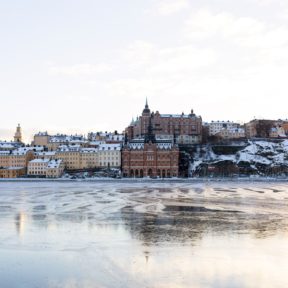
Case Study: Sweden
Sweden is currently the strongest performer on green economy planning, with a comprehensive approach that takes seriously the idea of "greening" the whole economy. This reflects Sweden’s long history of green leadership – it introduced the world’s first carbon tax in 1991 – and its inclusive culture, where cooperation and equality help build support for environmental ambition. Rather than one green economy ‘master plan’, Sweden has iterated dozens of separate policies over time, such as electric vehicles support or the 2017 Climate Act. In this way, Sweden has prioritised flexibility, without sacrificing long-term strategic vision.
Sweden Country Profile
Case Study: France
Reflecting its centralised traditions, France’s approach to green planning has focused on a single comprehensive plan, and a powerful ministry to implement it. Building on the ambition of the Paris Agreement, France has attempted to put all the tools needed to build a low carbon economy into a single piece of legislation: the Stratégie Nationale bas Carbone. Although it has yet to set a goal for full decarbonisation (this is expected soon), France leads the world on integrating the protection of nature and biodiversity, not just climate, into economic policy.