- Firm
- Provisional
- Coming soon
- Revised
- Firm
- Provisional
- Coming soon
- Revised
How well are we doing?
Editor's note: We have recently refreshed and updated our data for all countries on the platform, as we revised the 21 policies we cover.
Countries around the world are taking very different paths in their economic transitions, and there is wide variation in how far green priorities are embedded in recovery and growth strategies. Many countries may emphasise the need to ‘build back better’ – or greener – when recovering from shocks such as COVID-19, but there is a much weaker willingness to prioritise a green economy in practice.
Structural constraints remain significant, especially for low and middle-income economies, where limited ‘fiscal space’ and high debt burdens may restrict the ability to finance transformative green recovery measures. We are seeing this divergence across the 41 countries surveyed, where it tends to be the predominantly higher-income economies (with the exception of the USA, Saudi Arabia, and the United Arab Emirates) that are showing greater steps towards deploying ambitious green policies as part of economic recovery and stimulus. packages.
The strongest performers in this policy area include Sweden, followed by Canada, Germany, Spain, France, the United Kingdom, Italy, Japan, South Korea, Malaysia, and Portugal. Within this group, Malaysia stands out for advancing green recovery measures under more constrained fiscal conditions. The country’s green recovery elements are increasingly integrated into national industrial, energy, and budgetary frameworks, supporting renewable energy and long-term decarbonisation.
Countries like Indonesia and Argentina, on the other hand, focused their COVID-19 recovery on economic stabilisation through measures such as tax relief, subsidies, and credit and household support, with only limited environmental or just-transition conditionality attached. In Argentina’s case, this approach must be understood in the context of a deep recession and debt distress at the time the response was deployed. Some notable measures also include Uganda targeting funds at women and youth, Botswana considering legislation to improve economic empowerment, Ethiopia’s pilot project on tree-planting targeting women and girls, and Nigeria reserving 60% of its MSME survival fund for women entrepreneurs.
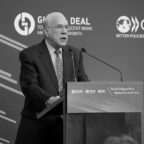
Governments have a unique chance for a green and inclusive recovery... a recovery that not only provides income and jobs, but also has broader goals, integrates strong climate and biodiversity action, and builds resilience.
About this policy
When the COVID-19 pandemic hit economies around the world with a simultaneous health and economic crisis, government priorities rightly shifted to stabilize healthcare systems and tackle the economic shocks from public health measures. But as the policy moment shifted from reaction to recovery, many governments found that deploying dedicated green recovery measures could be an importand towards a more sustainable, resilient, and inclusive economic model. This approach has new been generalised into greening of a range of economic stabilisation and stimulus policies.
There is a wide suite of green recovery policies governments can be looking at in their economic support packages, from consumer subsidies for renewable energy and electric vehicles, to industrial investment or loan guarantees for new manufacturing processes, to job creation via sustainable land management or energy efficiency retrofits. The most important – aside from channelling depression fighting stimulus funds accounting for significant % of GDP into green sectors – is introducing various kinds of ‘green conditionality’ to bailout deals and support provided across the economy. This includes making support for polluting or high environmental impact industries that is conditional on commitment to higher climate and ecological ambition, stronger social protection, or a just transition toward retirement of old technologies.
In assessing different countries’ green recovery measures and support packages, there is an inevitable focus on pandemic stabilisation policy - but the toolkit is relevent to any kind of financial and economic stabilisation. The highest scores have been reserved for approaches that deploy substantial measures across climate, biodiversity, and an inclusive, job rich green economy transition; and which have emphasised clear conditionality, credible budgets, and a commitment to structural change. Middle scores concentrate on countries who have fewer policy approaches, or pick up specific sectors and pieces of the structural response needed without a clear trajectory toward a green economy. While the lowest scores are for the countries with meagre integration of green measures into crisis response, due to weakness of ambition or (as is often the case) lack ability to deploy stimulus of any kind due to financial constraints.
Countries face very different circumstances of state and fiscal capacity, and consequently there is much variation in the size of stimulus measures and support packages, as well as the depth and breadth of green recovery policies. Much more targeted measures are the reality in countries with higher financing constraints and it will be up to external actors to help bridge the funding gap and ensure high ambition is made a reality. Despite this, with the right mix of ongoing support, monitoring and financing, matching an economic shock with a green recovery package offers an unmissable an opportunity to catalyse a wider structural shift towards inclusive, green economies around the world.
----------
To assess countries’ progress toward a green recovery specifically during COVID-19 we drew on a range of external tools and sources. These sources include:
IMF Policy Responses to COVID-19 - The IMF Policy Tracker summarizes the key economic responses governments are taking to limit the human and economic impact of the COVID-19 pandemic in 197 economies.
Greenness of Stimulus Index - The GSI is an assessment of COVID-19 stimulus by G20 countries and other major economies in relation to climate action and biodiversity goals.
Energy Policy Tracker - The Energy Policy Tracker database is updated on a weekly basis, to provide the latest information about COVID-19 government policy responses from a climate and energy perspective. Our analysis provides a detailed overview of the public finance flows as determined by recovery packages across the G20.
Green Recovery Tracker - The Green Recovery Tracker assesses the contribution of EU member states’ national recovery plans to the green transition.
Oxford Global Recovery Observatory - The Global Recovery Observatory brings transparency to global government spending during the COVID-19 crisis to showcase exemplary policy solutions, identify lost opportunities, and direct governments towards more impactful and sustainable investment.