- Firm
- Provisional
- Coming soon
- Revised
- Firm
- Provisional
- Coming soon
- Revised
How well are we doing?
Editor's note: We have recently refreshed and updated our data for all countries on the platform, as we revised the 21 policies we cover.
The transition to a greener economy is one part of the broader shift toward 21st century industries which are circular, more service based and more automated. But how can governments ensure that equity and inclusion are mainstreamed into this '4th industrial revolution', and a just transition is achieved in a world with less consumption? Inclusive social protection policies describe a range of different interventions that are starting to be considered to support citizens in the new economy - universal basic incomes, services and job or ownership guarantees.
However, many governments are yet to take seriously the need to overhaul social protection and employment policies, and policy ambition amongst the 41 countries reviewed was the weakest of all policy areas. Making next to no progress is a diverse group that included the USA, Türkiye, Serbia, South Korea, and the United Arab Emirates.
While no country met our highest level of ambition, showing higher degrees of progress are countries like Malaysia, Mongolia, France, and Brazil. Mongolia has made significant strides in linking climate finance to social outcomes through its “Eternal Mongolia” deal, focus on climate-resilience measures in its National Adaptation Plan, and expanded climate-sensitive safety nets through its Child Money Program. Meanwhile, Malaysia, with a long history of innovative social protection, continues to demonstrate ambition through recent initiatives such as the Social Exchange Pilot Programme, which enables social impact investment, and the 2025 budget’s expansion of cash aid and pensions coverage.

The climate emergency is hitting poorer countries and people the hardest even though they have done least to cause it... governments need to ensure their mitigation policies support the poorest.
About this policy
The opportunities of a greener economy – green jobs, sustainable economic growth, better health, a stable environment – also come with challenges, especially for those who may face unemployment and hardship. New industries are supplanting the old; automation and artificial intelligence is transforming employment; and some high-pollution industries are sunsetting towards shutdown entirely in many countries.. To support citizens through this transition, new kinds of inclusive social protection will be needed, and governments need to trial these approaches to future-proof their economies.
Innovations such as universal basic income, universal basic services, job guarantees, and community ownership models are aimed at ensuring that the economy is prepared for the challenge of a truly sustainable, digital and fourth industrial revolution. Although primarily focussing economic inclusion and social welfare, they can be linked directly to environmental conservation – such as through biocredits or conditional social transfers.
Many of these policies at an early stage of development, and governments are wary of reinventing their welfare or taxation systems entirely. The least prepared countries will be those who have are yet to take action, and rely on traditional or minimal forms of social protection. Others may have proposed local or limited pilots of income support or guaranteed services or jobs, and may even have begun trialling some approaches. Stronger policy frameworks will have a strategy for innovating different approaches, and have links to green economy and the just transition – perhaps even at the national level.
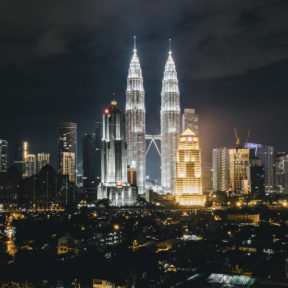
Case Study: Malaysia
Social protection policy in Malaysia is shaped by the 11th Malaysia Plan, with the 2019 budget announcement providing further detail on poverty alleviation approaches. The most notable policy includes the BR1M unconditional cash transfer scheme for low-income households, which provides every household with a monthly income of RM 2,000 (US$480) and below with a RM 1,000 (US$240) stipend. There are further, smaller stipends for households with monthly incomes up to US$ 1000, and extra support targeted at families with children.
Malaysia Country Profile