Poland
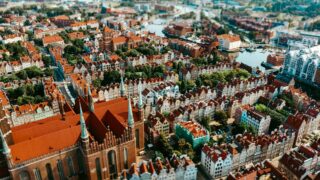
Photo by Sebastian Huber on Unsplash; Gdańsk, Poland
At the coal-face of Europe’s economic transformation
Poland has emerged as one of Europe’s surprise growth miracles, with a near 10-fold increase in its economy in the 30 years since the late 1990s. The transition from communism in the early 1990’s as the country saw a transformation from a soviet-style planned economy into a market economy - with sudden declines in social, economic and living standards. However, as early as 1995 these trends began to shift into reverse, and by 2004 Poland had joined NATO and the EU, and is now one of the major economies of the European Union. Both employment and participation rates have increased in recent years, while the unemployment rate has fallen to record lows.
In terms of the green economy, Poland performs moderately but can be considered a laggard in the EU context – performing lowest from the EU countries we include in our assessment. While progress towards green economy planning is pushed forward by national strategic policy frameworks such as the National Development Strategy through 2035 and the National Development Concept with a horizon of 2050, quantitative commitments within these documents remain absent.
While the current government shows more ambition in climate policy than the previous government led by the national-conservative PiS party, gaps remain. Poland remains the only EU Member State without a nationally legislated target for climate neutrality by 2050 and has still not submitted a final updated National Energy and Climate Plan (NECP) for which the EU commission referred Poland to the court of justice of the EU in October 2025.
A major barrier to progress is Poland’s continued reliance on coal, which remains central to its energy system. In 2024, coal still accounted for 57% of Poland’s annual residential consumption, marking Poland as the only remaining EU country still producing over half of its electricity from coal . There is currently a lack of a clear national policy on coal phase-out with some considering the formal coal phase-out by 2049 as unrealistic. However, small signs of progress exist. Coal’s share in the energy mix has actually dropped significantly in recent years alongside positive developments towards renewable energy, particularly through household solar installations, rising heat pump adoption, and planned offshore wind development. In 2022, Poland’s sale of heat pumps had doubled.
Efforts to ensure a just transition are relatively well developed, especially in coal regions such as Silesia, and with other regions benefiting from EU support through the EU Just Transition Fund. However challenges persist, including the absence of a single national strategy, limited public participation in transition planning, concerns about prioritising large infrastructure investment over social investments, limited coordination of public policies, and the formal exclusion of coal regions such as Turoszów Basin and the Lublin region with the intention of continued oil production in these regions.
Poland is showcasing strong leadership in green fiscal and monetary policy. The country is steadily advancing the integration of environmental considerations into its financial and economic policy framework. The country has a well-established banking stress-testing system, supported by the National Bank of Poland, and actively participates in EU-wide assessments. Financial institutions are increasingly incorporating climate-related risks into their risk management processes, while the National Bank of Poland is expanding its analysis of how climate change and the energy transition affect financial stability and inflation. In 2026, Poland’s National Fund for Environmental Protection and Water Management, a leader in green investment financing, is launching a €4.5 million ELENA pilot to support sustainable projects by companies and local governments. The €4.5 million initiative is largely funded by an ELENA grant from the European Investment Bank and European Commission.
Topics like the Green Deal and coal mining have become heavily politicised in Poland. The question remains whether heavy reliance on coal and gaps in climate policy will slow its overall transition to the green economy.
Photo by Sebastian Huber on Unsplash; Gdańsk, Poland
Policy Scores
Last updated 24 Apr 2026
Governance
National Green Economy Planning
The Energy Policy of Poland until 2040 (PEP2040), adopted in 2021, is widely considered outdated by many experts and analysts. The new one, which will last until 2050, is currently being prepared. A draft update of Poland’s National Energy and Climate Plan (NECP 2021-2030) was released in December 2025. This is less ambitious than the 2024 draft version. Its “Active Transformation” scenario targets around 51,6% renewable electricity by 2030 and a 43,3% reduction in GHG emissions compared to 1990 levels. However, Poland delayed the submission of its final updated NECP to the European Commission beyond the June 2024 deadline, making the country the only EU member state that has not yet done so, which led the Commission to refer the country to the Court of Justice of the European Union in October 2025. Two other strategic documents exist that address green economy issues in a more systematic manner: the Polish's Development Strategy through 2035 and the National Development Concept 2050. However, neither document contains any quantitative commitments, only qualitative statements such as 'greater participation' and 'greater re-education', or a declaration to achieve climate neutrality by 2050 without outlining how this will be achieved. Poland also remains the only EU Member State without a nationally legislated target for climate neutrality by 2050, although it is bound by the EU-wide objective under the European Climate Law.
The Energy Policy of Poland until 2040 (PEP2040), adopted in 2021, is widely considered outdated by many experts and analysts. The new one, which will last until 2050, is currently being prepared. A draft update of Poland’s National Energy and Climate Plan (NECP 2021-2030) was released in December 2025. This is less ambitious than the 2024 draft version. Its “Active Transformation” scenario targets around 51,6% renewable electricity by 2030 and a 43,3% reduction in GHG emissions compared to 1990 levels. However, Poland delayed the submission of its final updated NECP to the European Commission beyond the June 2024 deadline, making the country the only EU member state that has not yet done so, which led the Commission to refer the country to the Court of Justice of the European Union in October 2025. Two other strategic documents exist that address green economy issues in a more systematic manner: the Polish's Development Strategy through 2035 and the National Development Concept 2050. However, neither document contains any quantitative commitments, only qualitative statements such as 'greater participation' and 'greater re-education', or a declaration to achieve climate neutrality by 2050 without outlining how this will be achieved. Poland also remains the only EU Member State without a nationally legislated target for climate neutrality by 2050, although it is bound by the EU-wide objective under the European Climate Law.
Inclusive Corporate Governance
While Poland’s legal framework on corporate sustainability and inclusiveness is becoming more robust, it still sits more between a voluntary and a fully comprehensive system. The Corporate Sustainability Reporting Directive (CSRD) was transposed into Polish law in December 2024, with reporting obligations beginning to apply progressively from 2025 and expected to cover around 3.500 large companies under the European Sustainability Reporting Standards (ESRS). Poland is also preparing legislation to implement the EU Women on Boards Directive, which requires listed companies to reach at least 33% representation of the underrepresented sex on boards by mid 2026. In addition, amendments to the Labour Code that entered into force in 2025 introduced initial pay transparency rules aligned with the EU Pay Transparency Directive. Despite these developments, employee representation on corporate boards remains largely limited to state-owned enterprises, and Poland lacks a national strategy for inclusive corporate governance that goes beyond minimum EU requirements. Many substantive governance measures, including board gender balance targets and full pay-gap reporting, are still in implementation phase. The Warsaw Stock Exchange (WSE) updated its "Best Practices for Listed Companies" in 2024/2025 to include explicit ESG disclosure requirements even for smaller companies on the NewConnect market, using a "comply or explain" mechanism. It is worth emphasizing that the system is developing towards a more participatory, transparent and sustainable model of enterprise management in line with the SDGs.
While Poland’s legal framework on corporate sustainability and inclusiveness is becoming more robust, it still sits more between a voluntary and a fully comprehensive system. The Corporate Sustainability Reporting Directive (CSRD) was transposed into Polish law in December 2024, with reporting obligations beginning to apply progressively from 2025 and expected to cover around 3.500 large companies under the European Sustainability Reporting Standards (ESRS). Poland is also preparing legislation to implement the EU Women on Boards Directive, which requires listed companies to reach at least 33% representation of the underrepresented sex on boards by mid 2026. In addition, amendments to the Labour Code that entered into force in 2025 introduced initial pay transparency rules aligned with the EU Pay Transparency Directive. Despite these developments, employee representation on corporate boards remains largely limited to state-owned enterprises, and Poland lacks a national strategy for inclusive corporate governance that goes beyond minimum EU requirements. Many substantive governance measures, including board gender balance targets and full pay-gap reporting, are still in implementation phase. The Warsaw Stock Exchange (WSE) updated its "Best Practices for Listed Companies" in 2024/2025 to include explicit ESG disclosure requirements even for smaller companies on the NewConnect market, using a "comply or explain" mechanism. It is worth emphasizing that the system is developing towards a more participatory, transparent and sustainable model of enterprise management in line with the SDGs.
Participatory Policymaking
Poland has begun rebuilding institutional practices for participatory policymaking following the political changes of 2023 and subsequent efforts to restore rule-of-law and legislative transparency. Public consultations are conducted through government consultation portals managed by the Government Legislation Centre, allowing citizens and organizations to comment on draft legislation. Regulatory Impact Assessments are legally required for government bills and include social impact considerations, although they often lack disaggregated data on specific vulnerable groups. However, important gaps remain. Consultation requirements apply mainly to government drafts and can be bypassed when legislation is introduced by Members of Parliament or through fast-track procedures. Civil society organizations frequently criticize consultations for being “reactive”, taking place after draft laws are largely prepared rather than during the earlier stage. The 2025 "Warsaw Principles for the Rule of Law" assessment and Ombudsman reports note that while formal mechanisms for participation exist, rebuilding a culture of meaningful dialogue between public institutions and civil society remains a challenge. Participation is not fully connected to budgeting processes, investment planning, and policy effectiveness assessments. Furthermore, there are no KPIs to assess the quality and impact of participation. Various participation tools are underutilized, and there are insufficient guarantees to ensure the continuity of participatory bodies and processes.
Poland has begun rebuilding institutional practices for participatory policymaking following the political changes of 2023 and subsequent efforts to restore rule-of-law and legislative transparency. Public consultations are conducted through government consultation portals managed by the Government Legislation Centre, allowing citizens and organizations to comment on draft legislation. Regulatory Impact Assessments are legally required for government bills and include social impact considerations, although they often lack disaggregated data on specific vulnerable groups. However, important gaps remain. Consultation requirements apply mainly to government drafts and can be bypassed when legislation is introduced by Members of Parliament or through fast-track procedures. Civil society organizations frequently criticize consultations for being “reactive”, taking place after draft laws are largely prepared rather than during the earlier stage. The 2025 "Warsaw Principles for the Rule of Law" assessment and Ombudsman reports note that while formal mechanisms for participation exist, rebuilding a culture of meaningful dialogue between public institutions and civil society remains a challenge. Participation is not fully connected to budgeting processes, investment planning, and policy effectiveness assessments. Furthermore, there are no KPIs to assess the quality and impact of participation. Various participation tools are underutilized, and there are insufficient guarantees to ensure the continuity of participatory bodies and processes.
Beyond GDP
Statistics Poland (GUS) maintains datasets on quality of life, social cohesion, environmental sustainability and subjective wellbeing, and operates the national SDG monitoring platform, which tracks more than 140 indicators aligned with the UN Sustainable Development Goals. These metrics are occasionally referenced in strategic documents and EU-related planning instruments, including the National Recovery and Resilience Plan and national development strategies. However, beyond-GDP indicators mainly serve monitoring and reporting purposes rather than acting as binding inputs into policy or budget decisions. GDP growth and macroeconomic indicators remain the dominant reference points in economic planning. This is confirmed by OECD reports on Poland, which indicate that GDP per capita growth remains the basic indicator for assessing the country's economic progress.
Statistics Poland (GUS) maintains datasets on quality of life, social cohesion, environmental sustainability and subjective wellbeing, and operates the national SDG monitoring platform, which tracks more than 140 indicators aligned with the UN Sustainable Development Goals. These metrics are occasionally referenced in strategic documents and EU-related planning instruments, including the National Recovery and Resilience Plan and national development strategies. However, beyond-GDP indicators mainly serve monitoring and reporting purposes rather than acting as binding inputs into policy or budget decisions. GDP growth and macroeconomic indicators remain the dominant reference points in economic planning. This is confirmed by OECD reports on Poland, which indicate that GDP per capita growth remains the basic indicator for assessing the country's economic progress.
Finance
Green Finance & Banking
Polish banks and financial institutions are subject to the EU Sustainable Finance framework, including the EU Taxonomy, Sustainable Finance Disclosure Regulation and Corporate Sustainability Reporting Directive, which are improving the availability of ESG data and transparency for investors. The Polish Financial Supervision Authority has also incorporated climate-related risks into its supervisory priorities and expects banks to account for environmental risks within internal risk management frameworks such as ICAAP. However, practical implementation in banks is still at an early stage and is developing mainly under the pressure of new EU regulations. In addition, Poland has played a visible role in the regional green bond market since becoming the first sovereign issuer of green bonds in 2016, and several major Polish banks have adopted sustainable finance frameworks and developed green lending products supporting renewable energy and energy-efficiency investments. However, green finance policies remain largely driven by EU regulatory frameworks and a Sustainable Finance Roadmap for Poland is still in development. Climate-related financial risk assessment and sustainable investment incentives are still in implementation phase. There is no link between climate risk and possible adaptation measures, including the costs of inaction.
Polish banks and financial institutions are subject to the EU Sustainable Finance framework, including the EU Taxonomy, Sustainable Finance Disclosure Regulation and Corporate Sustainability Reporting Directive, which are improving the availability of ESG data and transparency for investors. The Polish Financial Supervision Authority has also incorporated climate-related risks into its supervisory priorities and expects banks to account for environmental risks within internal risk management frameworks such as ICAAP. However, practical implementation in banks is still at an early stage and is developing mainly under the pressure of new EU regulations. In addition, Poland has played a visible role in the regional green bond market since becoming the first sovereign issuer of green bonds in 2016, and several major Polish banks have adopted sustainable finance frameworks and developed green lending products supporting renewable energy and energy-efficiency investments. However, green finance policies remain largely driven by EU regulatory frameworks and a Sustainable Finance Roadmap for Poland is still in development. Climate-related financial risk assessment and sustainable investment incentives are still in implementation phase. There is no link between climate risk and possible adaptation measures, including the costs of inaction.
Greening Fiscal & Monetary Policy
In Poland, the implementation of ambitious environmental policies as part of economic stimulus and recovery packages is partial and gradual.Poland has a regular financial stress-testing framework for the banking sector, overseen by the Polish Financial Supervision Authority and supported by financial stability analysis conducted by the National Bank of Poland (NBP). Polish banks participate in EU-wide stress tests coordinated by the European Banking Authority, and supervisory expectations increasingly require financial institutions to integrate environmental risks into their internal risk management frameworks, including processes such as the Internal Capital Adequacy Assessment Process (ICAAP). Climate-related transition and physical risks are therefore beginning to be incorporated into financial stability analysis. The NBP has expanded its analytical work on the potential impact of climate change and the energy transition on financial stability and inflation. Despite these developments, not all financial institutions are subject to mandatory climate stress tests, nor does fiscal policy undergo systematic sustainability reviews comparable to green budgeting practices like some other EU countries. As a result, elements of a system for reducing environmental risk in public finances and the financial sector are being developed in Poland, but a coherent strategy combining tax reform, budget reform and financial policy with climate goals and biodiversity protection is still missing.
In Poland, the implementation of ambitious environmental policies as part of economic stimulus and recovery packages is partial and gradual.Poland has a regular financial stress-testing framework for the banking sector, overseen by the Polish Financial Supervision Authority and supported by financial stability analysis conducted by the National Bank of Poland (NBP). Polish banks participate in EU-wide stress tests coordinated by the European Banking Authority, and supervisory expectations increasingly require financial institutions to integrate environmental risks into their internal risk management frameworks, including processes such as the Internal Capital Adequacy Assessment Process (ICAAP). Climate-related transition and physical risks are therefore beginning to be incorporated into financial stability analysis. The NBP has expanded its analytical work on the potential impact of climate change and the energy transition on financial stability and inflation. Despite these developments, not all financial institutions are subject to mandatory climate stress tests, nor does fiscal policy undergo systematic sustainability reviews comparable to green budgeting practices like some other EU countries. As a result, elements of a system for reducing environmental risk in public finances and the financial sector are being developed in Poland, but a coherent strategy combining tax reform, budget reform and financial policy with climate goals and biodiversity protection is still missing.
Green Trade Practices
As an EU Member State, Poland’s trade policy is executed through the EU Common Commercial Policy, which increasingly mandates the inclusion of Trade and Sustainable Development chapters in modern agreements.
As an EU Member State, Poland’s trade policy is executed through the EU Common Commercial Policy, which increasingly mandates the inclusion of Trade and Sustainable Development chapters in modern agreements.
Pricing Carbon
Poland operates within a robust carbon pricing framework primarily through the EU Emissions Trading System, which covers the power sector, energy-intensive industry and aviation. Given Poland’s coal-intensive energy system, the ETS has a particularly significant impact on domestic energy prices and investment decisions. Poland also benefits from a well-developed emissions monitoring infrastructure through the National Centre for Emissions Management. At the strategic level, Poland’s latest draft updated NECP includes existing measures scenarios targeting around 43% emissions reductions by 2030, but these have not yet been adopted. The country also lacks a national climate law establishing long-term carbon budgets aligned with the 1.5 °C pathway. The formal social contract stipulates coal phase-out by 2049, and despite its unrealistic nature, there is no political will to change this. Between 1990 and 2025, direct budget support for the coal mining industry amounted to over €70 billion, and in 2025 alone, it amounted to approximately €2.3 billion. Poland is demanding a review of both ETS 1 and ETS 2 provisions to make them more flexible. The phase-out of combustion engine cars is also criticized. The general view is that the EU's climate policy, along with the European Green Deal, is "degrading" the economy and should be changed.
Poland operates within a robust carbon pricing framework primarily through the EU Emissions Trading System, which covers the power sector, energy-intensive industry and aviation. Given Poland’s coal-intensive energy system, the ETS has a particularly significant impact on domestic energy prices and investment decisions. Poland also benefits from a well-developed emissions monitoring infrastructure through the National Centre for Emissions Management. At the strategic level, Poland’s latest draft updated NECP includes existing measures scenarios targeting around 43% emissions reductions by 2030, but these have not yet been adopted. The country also lacks a national climate law establishing long-term carbon budgets aligned with the 1.5 °C pathway. The formal social contract stipulates coal phase-out by 2049, and despite its unrealistic nature, there is no political will to change this. Between 1990 and 2025, direct budget support for the coal mining industry amounted to over €70 billion, and in 2025 alone, it amounted to approximately €2.3 billion. Poland is demanding a review of both ETS 1 and ETS 2 provisions to make them more flexible. The phase-out of combustion engine cars is also criticized. The general view is that the EU's climate policy, along with the European Green Deal, is "degrading" the economy and should be changed.
Sectors
Cross-Sectoral Planning
Poland has sector-specific sustainability and climate strategies across several economic sectors, but coordination between these sectors remains fragmented. Silo-based thinking is a significant shortcoming of strategic planning in Poland.The Ministry of Climate and Environment plays a central role in developing national climate and energy policy, including the Energy Policy of Poland to 2040 and the National Energy and Climate Plan. Poland has two other strategic documents that address green economy issues in a more systematic manner: the National Development Strategy through 2035 and the National Development Concept with a horizon of 2050. The Ministry of Development Funds and Regional Policy is responsible for their preparation and implementation, while other sectors such as transport, agriculture and industry are governed by separate strategies managed by different ministries. Agricultural sustainability measures are implemented through Poland’s CAP Strategic Plan, while transport and infrastructure policies include elements supporting decarbonisation and sustainable mobility. However, coordination between the two medium- long- term and sectoral documents is weak. Furthermore, they are not always consistent with the SDGs, and there is a significant divergence, particularly on environmental issues such as GHG emissions, nature conservation, and water management. Monitoring systems exist through the National Centre for Emissions Management (KOBiZE) and Statistics Poland, but they focus on data collection and reporting rather than policy coordination.
Poland has sector-specific sustainability and climate strategies across several economic sectors, but coordination between these sectors remains fragmented. Silo-based thinking is a significant shortcoming of strategic planning in Poland.The Ministry of Climate and Environment plays a central role in developing national climate and energy policy, including the Energy Policy of Poland to 2040 and the National Energy and Climate Plan. Poland has two other strategic documents that address green economy issues in a more systematic manner: the National Development Strategy through 2035 and the National Development Concept with a horizon of 2050. The Ministry of Development Funds and Regional Policy is responsible for their preparation and implementation, while other sectors such as transport, agriculture and industry are governed by separate strategies managed by different ministries. Agricultural sustainability measures are implemented through Poland’s CAP Strategic Plan, while transport and infrastructure policies include elements supporting decarbonisation and sustainable mobility. However, coordination between the two medium- long- term and sectoral documents is weak. Furthermore, they are not always consistent with the SDGs, and there is a significant divergence, particularly on environmental issues such as GHG emissions, nature conservation, and water management. Monitoring systems exist through the National Centre for Emissions Management (KOBiZE) and Statistics Poland, but they focus on data collection and reporting rather than policy coordination.
Circular Economy
Poland's national framework for the circular economy is the 2019 “Roadmap towards the Transition to Circular Economy”, which identifies priority sectors such as construction, plastics, biomass and food systems, and waste management. The roadmap promotes resource efficiency, eco-design, improved recycling systems and support for circular innovation. The Circular Economy Roadmap was a good initiation document developed seven years ago, but it fell short as an implementation tool. It lacks clear standards for reuse, mandatory public procurement requirements, a formal support system for circular enterprises, a sustainable competency-building program, and measurable targets for growth in circular economy and key sectors.In recent years, Poland has also begun implementing additional measures aligned with EU circular economy legislation, including a national deposit-return system for beverage packaging introduced in October 2025, as well as extended producer responsibility schemes and recycling targets derived from EU waste directives. Despite these developments, the circular economy framework remains partially implemented and strongly focused on waste management rather than systemic circularity across sectors.
Poland's national framework for the circular economy is the 2019 “Roadmap towards the Transition to Circular Economy”, which identifies priority sectors such as construction, plastics, biomass and food systems, and waste management. The roadmap promotes resource efficiency, eco-design, improved recycling systems and support for circular innovation. The Circular Economy Roadmap was a good initiation document developed seven years ago, but it fell short as an implementation tool. It lacks clear standards for reuse, mandatory public procurement requirements, a formal support system for circular enterprises, a sustainable competency-building program, and measurable targets for growth in circular economy and key sectors.In recent years, Poland has also begun implementing additional measures aligned with EU circular economy legislation, including a national deposit-return system for beverage packaging introduced in October 2025, as well as extended producer responsibility schemes and recycling targets derived from EU waste directives. Despite these developments, the circular economy framework remains partially implemented and strongly focused on waste management rather than systemic circularity across sectors.
Green Transport & Mobility
Electrification is advancing most clearly in urban bus fleets and city-level policies, while freight decarbonisation and nationwide electrification remain less advanced. Poland has invested significantly in the electrification of urban and regional public transport, specially through the National Fund for Environmental Protection and Water Management’s “Green Public Transport” programme (Zielony Transport Publiczny). Implemented in several editions with a total budget of around 5 billion PLN, the programme has financed hundreds of zero-emission buses along with charging and refuelling infrastructure. Additional support comes from Poland’s Recovery and Resilience Plan, which also funds electric and hydrogen buses and related infrastructure. At the regulatory level, the Electromobility and Alternative Fuels Act provides the national framework for alternative fuels and charging deployment, while Warsaw introduced Poland’s first Clean Transport Zone in 2024. There is public resistance in large cities to clean transport zones, for example, in Krakow and Warsaw. For private electric vehicles, consumer incentives were expanded through the “NaszEauto” purchase subsidy programme, launched in 2025 with a budget of around 1.6 billion PLN, and EU regulations (CO₂ standards for new cars and vans. Transport exclusion is strongly felt in rural areas, which creates pressure to use cars. At the same time, the average age of a passenger car in Poland is approximately 15–16 years. The estimated total lifespan of a car is 20–23 years. Alternative Fuels Infrastructure Regulation, etc.) also shape national policy.
Electrification is advancing most clearly in urban bus fleets and city-level policies, while freight decarbonisation and nationwide electrification remain less advanced. Poland has invested significantly in the electrification of urban and regional public transport, specially through the National Fund for Environmental Protection and Water Management’s “Green Public Transport” programme (Zielony Transport Publiczny). Implemented in several editions with a total budget of around 5 billion PLN, the programme has financed hundreds of zero-emission buses along with charging and refuelling infrastructure. Additional support comes from Poland’s Recovery and Resilience Plan, which also funds electric and hydrogen buses and related infrastructure. At the regulatory level, the Electromobility and Alternative Fuels Act provides the national framework for alternative fuels and charging deployment, while Warsaw introduced Poland’s first Clean Transport Zone in 2024. There is public resistance in large cities to clean transport zones, for example, in Krakow and Warsaw. For private electric vehicles, consumer incentives were expanded through the “NaszEauto” purchase subsidy programme, launched in 2025 with a budget of around 1.6 billion PLN, and EU regulations (CO₂ standards for new cars and vans. Transport exclusion is strongly felt in rural areas, which creates pressure to use cars. At the same time, the average age of a passenger car in Poland is approximately 15–16 years. The estimated total lifespan of a car is 20–23 years. Alternative Fuels Infrastructure Regulation, etc.) also shape national policy.
Clean Energy
"Poland's clean energy policy framework is evolving, from the Energy Policy of Poland until 2040 (PEP2040) from 2021, which is considered outdated and projected 32 % renewable electricity by 2030, to the latest draft update of the National Energy and Climate Plan (NECP 2021-2030) from 2025, which raises ambition to 51,6% renewable electricity by 2030, although Poland has not yet submitted the final updated NECP to the European Commission as of early 2026. Poland has paired renewable targets with substantial investment plans focused on new generation, grids and thermal modernisation, alongside offshore wind contracts-for-difference and renewable energy auctions. However, the renewable target for final energy consumption in the draft NECP remains moderate (29-30%), and there is permitting uncertainty regarding onshore wind rules.Also important is the insufficient support for citizen energy ccommunities and biogas.
"Poland's clean energy policy framework is evolving, from the Energy Policy of Poland until 2040 (PEP2040) from 2021, which is considered outdated and projected 32 % renewable electricity by 2030, to the latest draft update of the National Energy and Climate Plan (NECP 2021-2030) from 2025, which raises ambition to 51,6% renewable electricity by 2030, although Poland has not yet submitted the final updated NECP to the European Commission as of early 2026. Poland has paired renewable targets with substantial investment plans focused on new generation, grids and thermal modernisation, alongside offshore wind contracts-for-difference and renewable energy auctions. However, the renewable target for final energy consumption in the draft NECP remains moderate (29-30%), and there is permitting uncertainty regarding onshore wind rules.Also important is the insufficient support for citizen energy ccommunities and biogas.
Just Transition
Green Job Creation
Poland has created most of its green jobs around EU-funded territorial planning for coal and lignite regions, rather than a single national strategy. The European Commission adopted five Polish regional programmes with Territorial Just Transition Plans under the Just Transition Fund in 2022, covering Upper Silesia (with spillovers into Western Małopolska), Eastern Wielkopolska (Konin), Lower Silesia (Wałbrzych), and Łódzkie (Bełchatów). Moreover, two mining regions, i.e. Zagłębie Turoszów and the Lublin region, were not included in the transformation plans, mainly because Polish energy policy assumes further coal mining in these regions for many years, which formally excludes them from the support mechanisms for regions moving away from coal.These plans link economic diversification with new employment opportunities, including SME support in green sectors, site redevelopment and training and reskilling for workers affected by coal phase-down. However, despite the financial possibilities and significant potential for new jobs, the adjustment of qualifications, the coordination of public policies and the pace of transformation are insufficient. Commission documentation highlights training programmes potentially covering tens of thousands of workers. Alongside this, Poland’s Recovery and Resilience Plan (2022, updated in 2023) includes decarbonisation investments.
Poland has created most of its green jobs around EU-funded territorial planning for coal and lignite regions, rather than a single national strategy. The European Commission adopted five Polish regional programmes with Territorial Just Transition Plans under the Just Transition Fund in 2022, covering Upper Silesia (with spillovers into Western Małopolska), Eastern Wielkopolska (Konin), Lower Silesia (Wałbrzych), and Łódzkie (Bełchatów). Moreover, two mining regions, i.e. Zagłębie Turoszów and the Lublin region, were not included in the transformation plans, mainly because Polish energy policy assumes further coal mining in these regions for many years, which formally excludes them from the support mechanisms for regions moving away from coal.These plans link economic diversification with new employment opportunities, including SME support in green sectors, site redevelopment and training and reskilling for workers affected by coal phase-down. However, despite the financial possibilities and significant potential for new jobs, the adjustment of qualifications, the coordination of public policies and the pace of transformation are insufficient. Commission documentation highlights training programmes potentially covering tens of thousands of workers. Alongside this, Poland’s Recovery and Resilience Plan (2022, updated in 2023) includes decarbonisation investments.
Just Transition Frameworks
Poland has relatively solid just transition implementation frameworks, which are stronger at coal regions, but it does not have a single national strategy. The aim is for the climate transition to be both a social and economic transformation, particularly in coal-dependent regions. The most important instrument for achieving this priority is the EU's Just Transition Mechanism, whose key tool is the Just Transition Fund (JTF) in conjunction with Poland's Energy Policy 2040, the NECP, and a broad package of EU and national funds. However, analyses by social organizations point to several weaknesses of the Polish approach: the dominance of infrastructure investments over social investments, weak public participation in transition planning, unclear timelines for phasing out coal, the risk of financing large enterprises at the expense of local initiatives, and insufficient linkage with labor market policy.
Poland has relatively solid just transition implementation frameworks, which are stronger at coal regions, but it does not have a single national strategy. The aim is for the climate transition to be both a social and economic transformation, particularly in coal-dependent regions. The most important instrument for achieving this priority is the EU's Just Transition Mechanism, whose key tool is the Just Transition Fund (JTF) in conjunction with Poland's Energy Policy 2040, the NECP, and a broad package of EU and national funds. However, analyses by social organizations point to several weaknesses of the Polish approach: the dominance of infrastructure investments over social investments, weak public participation in transition planning, unclear timelines for phasing out coal, the risk of financing large enterprises at the expense of local initiatives, and insufficient linkage with labor market policy.
Greening MSMEs & Social Enterprise
Poland has legal recognition for social enterprises through the Social Economy Act of 2022, which created a support ecosystem and Social Economy Support Centre. This does not constitute, however, a specific legal form exclusively for social enterprises. Support for greening MSMEs comes mainly from EU programmes, and there is no integrated national package targeting green transition for MSMEs. Poland announced in late 2025 a Digital and Environmentally Friendly Transformation Fund to support energy-saving and digital investments for MSMEs. Significant gaps include: lack of a coherent strategy, limited access to finance for SMEs, poor use of green public procurement and insufficient linking of the social economy with the green transformation.
Poland has legal recognition for social enterprises through the Social Economy Act of 2022, which created a support ecosystem and Social Economy Support Centre. This does not constitute, however, a specific legal form exclusively for social enterprises. Support for greening MSMEs comes mainly from EU programmes, and there is no integrated national package targeting green transition for MSMEs. Poland announced in late 2025 a Digital and Environmentally Friendly Transformation Fund to support energy-saving and digital investments for MSMEs. Significant gaps include: lack of a coherent strategy, limited access to finance for SMEs, poor use of green public procurement and insufficient linking of the social economy with the green transformation.
Inclusive Social Protection
Citizen participation in developing a new green economy in Poland is limited and fragmented, with the main actors in the transformation being the state, local governments, and large energy companies. The most visible form of public engagement is the development of prosumer renewable energy, supported by, among others, the "Mój Prąd" (My Electricity) program, which has resulted in the installation of over a million photovoltaic installations in households. However, this participation is primarily individual and consumer in nature, rather than community-based or based on shared ownership of energy infrastructure. Instruments enabling collective ownership, such as energy cooperatives and energy communities regulated by the Renewable Energy Sources Act, are developing relatively slowly due to regulatory and financial barriers. The social economy sector, strengthened by the Social Economy Act, is only marginally involved in climate-related activities, focusing more on social inclusion than green economic innovation. Pilots of new social security models related to climate change, such as basic income or civic funds, are practically nonexistent in Poland. As a result, the Polish green transformation is largely technocratic in nature, and the potential of economic democracy and social ownership in the transformation process is still poorly exploited.
Citizen participation in developing a new green economy in Poland is limited and fragmented, with the main actors in the transformation being the state, local governments, and large energy companies. The most visible form of public engagement is the development of prosumer renewable energy, supported by, among others, the "Mój Prąd" (My Electricity) program, which has resulted in the installation of over a million photovoltaic installations in households. However, this participation is primarily individual and consumer in nature, rather than community-based or based on shared ownership of energy infrastructure. Instruments enabling collective ownership, such as energy cooperatives and energy communities regulated by the Renewable Energy Sources Act, are developing relatively slowly due to regulatory and financial barriers. The social economy sector, strengthened by the Social Economy Act, is only marginally involved in climate-related activities, focusing more on social inclusion than green economic innovation. Pilots of new social security models related to climate change, such as basic income or civic funds, are practically nonexistent in Poland. As a result, the Polish green transformation is largely technocratic in nature, and the potential of economic democracy and social ownership in the transformation process is still poorly exploited.
Nature
Ocean & Land Conservation
Poland is a party to the Convention on Biological Diversity and has committed to achieving global nature conservation goals, including SDG 14 (Life Below Water) and SDG 15 (Life on Land), as well as the new Kunming-Montreal Global Biodiversity Framework. The key tool for implementing these commitments should be the National Biodiversity Strategy (NBSAP), however, the last comprehensive document in Poland covered the period 2015–2020 and has not yet been fully updated to reflect the new global goals. In practice, the main strategic document remains the National Environmental Policy 2030, which identifies the protection of ecosystems, the development of green infrastructure, and the preservation of biodiversity as important environmental policy goals. However, this document primarily contains general action lines and does not specify detailed quantitative targets or a mechanism for implementing the new global biodiversity commitments. Policy implementation relies primarily on existing instruments, such as the Natura 2000 network, national parks, and EU programs. However, expert analyses point to the deteriorating condition of many habitats and the pressures of agriculture, infrastructure, and forestry. As a result, Poland formally implements international commitments in the field of biodiversity protection, but there is no up-to-date, comprehensive strategy for implementing global goals along with a systematic assessment of progress. Poland applies the Marine Strategy Framework Directive and integrates conservation into maritime planning through the national Maritime Spatial Plan adopted in 2021.
Poland is a party to the Convention on Biological Diversity and has committed to achieving global nature conservation goals, including SDG 14 (Life Below Water) and SDG 15 (Life on Land), as well as the new Kunming-Montreal Global Biodiversity Framework. The key tool for implementing these commitments should be the National Biodiversity Strategy (NBSAP), however, the last comprehensive document in Poland covered the period 2015–2020 and has not yet been fully updated to reflect the new global goals. In practice, the main strategic document remains the National Environmental Policy 2030, which identifies the protection of ecosystems, the development of green infrastructure, and the preservation of biodiversity as important environmental policy goals. However, this document primarily contains general action lines and does not specify detailed quantitative targets or a mechanism for implementing the new global biodiversity commitments. Policy implementation relies primarily on existing instruments, such as the Natura 2000 network, national parks, and EU programs. However, expert analyses point to the deteriorating condition of many habitats and the pressures of agriculture, infrastructure, and forestry. As a result, Poland formally implements international commitments in the field of biodiversity protection, but there is no up-to-date, comprehensive strategy for implementing global goals along with a systematic assessment of progress. Poland applies the Marine Strategy Framework Directive and integrates conservation into maritime planning through the national Maritime Spatial Plan adopted in 2021.
Natural Capital Accounting
Poland does not have a national natural capital accounting strategy nor integrates natural capital considerations into government planning, budgets or major investment decisions. Statistics Poland produces SEEA-aligned accounts, for example air emissions, other environmental accounts and economy-wide material flow accounts. There has been experimental work on ecosystem indicators on urban green spaces. Polish scientific research and expert projects also include analyses of ecosystem services and the value of natural capital for the economy and social well-being. However, these have not been fully integrated into the national accounts system or the economic decision-making process. Poland also lacks an independent advisory institution analyzing the importance of natural capital in state budgets or infrastructure planning. Environmental data are primarily used in monitoring and reporting systems, not as a tool for assessing the value of nature in economic policy.Poland also participates in the EU transition toward SEEA Ecosystem Accounting, with new reporting requirements expected from 2026.
Poland does not have a national natural capital accounting strategy nor integrates natural capital considerations into government planning, budgets or major investment decisions. Statistics Poland produces SEEA-aligned accounts, for example air emissions, other environmental accounts and economy-wide material flow accounts. There has been experimental work on ecosystem indicators on urban green spaces. Polish scientific research and expert projects also include analyses of ecosystem services and the value of natural capital for the economy and social well-being. However, these have not been fully integrated into the national accounts system or the economic decision-making process. Poland also lacks an independent advisory institution analyzing the importance of natural capital in state budgets or infrastructure planning. Environmental data are primarily used in monitoring and reporting systems, not as a tool for assessing the value of nature in economic policy.Poland also participates in the EU transition toward SEEA Ecosystem Accounting, with new reporting requirements expected from 2026.
Sustainable Agriculture & Food Systems
In Poland, food policy is spread across several sectoral frameworks, with no single national food strategy with clear long-term targets and coordinated governance. Agricultural sustainability is addressed through the Strategy for Sustainable Rural, Agricultural and Fisheries Development 2030 and the CAP Strategic Plan 2023-2027, which supports greener farming through eco-schemes and environmental measures. Healthier diets are promoted through the National Health Programme 2021-2025 and dietary guidelines, while food waste is addressed by the Act on Counteracting Food Waste (2019) requiring large retailers to redistribute unsold food. At the same time, experts point to the limited scale of food system transformation, the low share of organic production, and the dominance of subsidies supporting intensive production. There is also a lack of a coherent policy for healthy diets and systemic reform of agricultural support for ecosystem services. As a result, the implementation of SDG 2 and SDG 12 is partial and dispersed across various agricultural and environmental policy instruments.
In Poland, food policy is spread across several sectoral frameworks, with no single national food strategy with clear long-term targets and coordinated governance. Agricultural sustainability is addressed through the Strategy for Sustainable Rural, Agricultural and Fisheries Development 2030 and the CAP Strategic Plan 2023-2027, which supports greener farming through eco-schemes and environmental measures. Healthier diets are promoted through the National Health Programme 2021-2025 and dietary guidelines, while food waste is addressed by the Act on Counteracting Food Waste (2019) requiring large retailers to redistribute unsold food. At the same time, experts point to the limited scale of food system transformation, the low share of organic production, and the dominance of subsidies supporting intensive production. There is also a lack of a coherent policy for healthy diets and systemic reform of agricultural support for ecosystem services. As a result, the implementation of SDG 2 and SDG 12 is partial and dispersed across various agricultural and environmental policy instruments.
Nature Finance
Poland uses several fiscal tools based on the polluter-pays principle, including environmental fees and taxes that generate revenue for environmental purposes. A key funding mechanism is the National Fund for Environmental Protection and Water Management (NFOŚiGW), which finances programmes related to water protection, climate adaptation and environmental projects, alongside EU funding. Poland also receives biodiversity funding through EU programmes such as the LIFE Programme, which supports habitat protection and restoration. However, fossil-fuel support still exists, and Poland has not developed more ambitious national instruments such as biodiversity credit markets or offset systems.. Elements of this transformation are also emerging in various areas of public policy, including the Common Agricultural Policy Strategic Plan, which introduces eco-schemes supporting organic farming, soil protection, water retention, and biodiversity conservation. Additionally, the state is developing green financing instruments, such as green treasury bonds, which can finance projects related to ecosystem protection, water management, and sustainable agriculture. Payments for ecosystem services are also emerging, intended to reward farmers and landowners for their environmental protection efforts. At the same time, however, numerous subsidies and economic incentives continue to operate, promoting intensive agricultural production and the use of fossil fuels. Therefore, the current financial system in Poland can be described as a hybrid, in which new pro-environmental instruments are being gradually introduced but have not yet replaced traditional economic support mechanisms.
Poland uses several fiscal tools based on the polluter-pays principle, including environmental fees and taxes that generate revenue for environmental purposes. A key funding mechanism is the National Fund for Environmental Protection and Water Management (NFOŚiGW), which finances programmes related to water protection, climate adaptation and environmental projects, alongside EU funding. Poland also receives biodiversity funding through EU programmes such as the LIFE Programme, which supports habitat protection and restoration. However, fossil-fuel support still exists, and Poland has not developed more ambitious national instruments such as biodiversity credit markets or offset systems.. Elements of this transformation are also emerging in various areas of public policy, including the Common Agricultural Policy Strategic Plan, which introduces eco-schemes supporting organic farming, soil protection, water retention, and biodiversity conservation. Additionally, the state is developing green financing instruments, such as green treasury bonds, which can finance projects related to ecosystem protection, water management, and sustainable agriculture. Payments for ecosystem services are also emerging, intended to reward farmers and landowners for their environmental protection efforts. At the same time, however, numerous subsidies and economic incentives continue to operate, promoting intensive agricultural production and the use of fossil fuels. Therefore, the current financial system in Poland can be described as a hybrid, in which new pro-environmental instruments are being gradually introduced but have not yet replaced traditional economic support mechanisms.
Green Recovery
Green Recovery Measures
In Poland, the implementation of ambitious environmental policies as part of economic stimulus and recovery packages is partial and gradual.Poland’s green recovery is implemented through the National Recovery and Resilience Plan under the EU Recovery and Resilience Facility, approved by the European Commission in 2022. About 42.7% of the plan’s funding is allocated to climate objectives, and the REPowerEU update approved in 2023 further increased green spending. The plan supports investments such as building renovation and clean heating (Clean Air programme), renewable energy including offshore wind, green mobility and reforms to speed up renewable energy deployment. However, Poland’s response to the 2022-2023 energy crisis relied on energy price subsidies and coal-related support. At the same time, experts point out that these actions do not always constitute a coherent green transformation package, as some economic policies continue to support high-emission sectors or maintain environmentally harmful subsidies. As a result, Poland's economic stabilization policy is contributing to progress towards a more ecological development model, but the scale and pace of this transformation are assessed as moderate.
In Poland, the implementation of ambitious environmental policies as part of economic stimulus and recovery packages is partial and gradual.Poland’s green recovery is implemented through the National Recovery and Resilience Plan under the EU Recovery and Resilience Facility, approved by the European Commission in 2022. About 42.7% of the plan’s funding is allocated to climate objectives, and the REPowerEU update approved in 2023 further increased green spending. The plan supports investments such as building renovation and clean heating (Clean Air programme), renewable energy including offshore wind, green mobility and reforms to speed up renewable energy deployment. However, Poland’s response to the 2022-2023 energy crisis relied on energy price subsidies and coal-related support. At the same time, experts point out that these actions do not always constitute a coherent green transformation package, as some economic policies continue to support high-emission sectors or maintain environmentally harmful subsidies. As a result, Poland's economic stabilization policy is contributing to progress towards a more ecological development model, but the scale and pace of this transformation are assessed as moderate.