- Firm
- Provisional
- Coming soon
- Revised
- Firm
- Provisional
- Coming soon
- Revised
How well are we doing?
Editor's note: We have recently refreshed and updated our data for all countries on the platform, as we revised the 21 policies we cover.
Small businesses are the engine-room of the world. In emerging economies, small and medium enterprises on average provide 60% of the jobs and 40% of GDP – even more when informal markets are accounted for – while in the European Union, SMEs account for 99% of all firms. Legal, financial, and regulatory support to greening Micro, Small, and Medium-sized Enterprises and Social Enterprises is therefore vital to the green economy, ensuring that companies of all sizes can go green.
All 41 countries surveyed for the tracker are showing at least some support for MSME’s to adopt green business models and social entrepreneurship, though to varying degrees.
South Korea and the United Kingdom are setting the standard in this policy area, providing a distinct legal form for social enterprises as well as clear policies and direct support mechanisms for socially conscious green business. South Korea’s comprehensive support ecosystem which includes subsidies, training, and procurement preferences alongside its targeted instruments for green ventures enables MSMEs and social ventures to adopt green models with financial and technical support.
Meanwhile in countries like the United Arab Emirates, support for SMEs exists but focuses on entrepreneurship, access to finance and government procurement rather than adopting green models. China also provides some support, with MSMEs encouraged to participate in ecological industries and have access to green loans; however these measures remain limited in scope. In both contexts, comprehensive greening support for MSME’s as well as a distinct legal form for social enterprises, have yet to be established.
Colombia, Italy, Spain, Malaysia and Peru are not far behind – all building on the solid foundation of a legal framework for social enterprise, and starting to introduce regulatory exemptions and limited financial support for entrepreneurs and small businesses going green.

As SMEs employ up to 60% of the global workforce, their full involvement in the transition to an inclusive green economy is essential to achieving the SDGs.
About this policy
Small start-ups are agile, innovative, and entrepreneurial – exactly what is needed to develop the technologies and business practices of tomorrow. But smaller firms often operate on tight margins and have limited capacity; new environmental regulations can feel especially onerous. Greening MSMEs & social enterprise means both empowering entrepreneurs to innovate new green businesses, while also providing support for traditional MSMEs to green conventional business models.
Social enterprises have an increasingly important role to play, especially those that have a mission to deliver social, environmental and financial rewards – the “triple bottom-line” approach. Creating the right legal frameworks, fiscal incentives and regulatory support for small or social-purpose business is the real challenge for governments.
The weakest policies for green businesses provide no support at all for SMEs, whether they are trying to be green or not. Basic approaches indicate general support for small business and additional help to go green, perhaps through limited regulatory exemptions or training. Better policies have strong legal definitions for social enterprise and support for triple bottom-line businesses, and the most ambitious include financial support for green business models and sustainable practices.
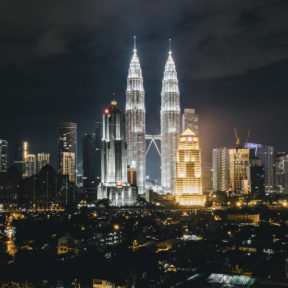
Case Study: Malaysia
Social enterprise is a concept that has gained real attention in Malaysia, and is central to an entrepreneur-led approach to economic development. The Malaysian Social Enterprise Blueprint 2015-18 – published by the Malaysian Global Innovation and Creativity Centre (MaGIC) – sets out the plan for a comprehensive social enterprise ecosystem, including a legal definition and enabling environment. The Malaysian approach emphasises the social and environmental benefits of mission-driven enterprise as an engine for eco-innovation.
Malaysia Country Profile
Case Study: France
In many ways the originator of a ‘social and solidarity economy’ model, combining business innovation with social consciousness, France has a broad definition of social enterprise and a variety of support programmes for small business innovation. Direct support for MSME greening includes training and financing for participation in the ecological transition.
France Country Profile