- Firm
- Provisional
- Coming soon
- Revised
- Firm
- Provisional
- Coming soon
- Revised
How well are we doing?
Editor's note: We have recently refreshed and updated our data for all countries on the platform, as we revised the 21 policies we cover.
Economic growth alone does not capture environmental sustainability, social wellbeing, or long-term resilience. Beyond GDP measures, such as wellbeing metrics or a national comprehensive wealth framework, provide a more complete picture of progress and are essential for a green economy.
National policies here generally fall around the mid-range, with Sweden standing out as a notable high-performer with a comprehensive framework that links economic, social and environmental well-being across policy cycles as well as their Comprehensive Wealth and Sustainability Dashboard that tracks human, natural, social, and financial capital alongside GDP.
Meanwhile, Italy maintains one of the most institutionalised beyond-GDP systems in the EU, with BES (Benessere Equo e Sostenibile) indicators updated annually and integrated into fiscal planning. However a single comprehensive national wealth framework covering all capital stocks (human/social/natural/produced/financial) remains partial.
Lagging behind are countries such as the United States of America which lacks a clear national mandate to integrate beyond GDP components into planning, and Türkiye, which has made progress with its Twelfth Development Plan (2024–2028) by mandating the expansion of progress measurement beyond traditional GDP, but has some way to go as the development of metrics are still under discussion and in early preparation.

...We have broadened our definition of success for [New Zealand] to one that incorporates not just the health of our finances, but also of our natural resources, people and communities.
About this policy
Using gross domestic product (GDP) alone to understand a country’s economy is like trying to assess your personal finances using only your monthly pay check – ignoring how much you’ve saved in the bank, or the value of any assets, or personal circumstances. There are many 'beyond GDP' approaches being trialled by researchers and governments - but for a building a green economy above all we need metrics that provide a comprehensive, long term picture of our economies.
For example, a well-educated population is a valuable asset to any nation, as are clean air and water. Using GDP alone to assess new policies might miss impacts on these resources – for example, deregulating heavy industry might boost growth, but also increase air & water pollution, resulting in higher child mortality and lower IQs. These trade-offs are in the background of all policy decisions, but new measures can help to bring them to the fore for key decision makers.
Measures of comprehensive wealth ('wealth accounting') are one route to a more complete economic picture by consistently measuring things that can be as important to the economy as financial activity, but are often overlooked by conventional accounting: good public health, strong social cohesion, hubs of creative thinking and innovation, or even a stable climate. Wealth accounts are a relatively new innovation, and many governments have yet to consider making use of them at all.
Wellbeing frameworks and beyond GDP dashboards have become increasingly popular as a way of integrating more comprehensive measures into the policy cycle, with national statistical bodies taking on some of these measures as formal targets and national statistics for ad hoc planning purposes.
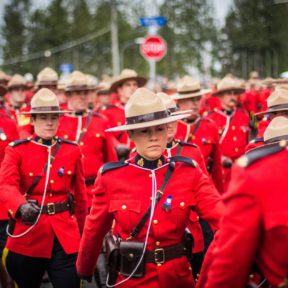
Case Study: Canada
Statistics Canada takes a conventional approach to assessing Canada’s national balance sheet, but supplements this by including environmental resources and some intangible capitals in their national assessment. It has been left to organisations outside the government to use this data to devise Canadian wealth accounts – such as the IISD’s Comprehensive Wealth in Canada 2018 report. This builds on UN and World Bank inclusive wealth methodologies to measure produced, natural, human, financial and social capital. Given that Statistics Canada already measures many of the relevant components, the IISD report recommends that measurement of comprehensive wealth should be brought inside Statistics Canada and made an official complement of regular GDP reporting by the federal government.
Canada Country Profile