- Firm
- Provisional
- Coming soon
- Revised
- Firm
- Provisional
- Coming soon
- Revised
How well are we doing?
Editor's note: We have recently refreshed and updated our data for all countries on the platform, as we revised the 21 policies we cover.
Ensuring a just transition to greener economies - transition where negative impacts on groups of workers or citizens are mitigated and managed so no one is left behind - is a top priority for decisionmakers in all economies. A clear structure and support plan can make the difference between buy-in and backlash to economic changes that benefit everyone by protecting our environment and climate. Overall performance in this policy area is mid-range, with a small group of countries performing strongly, while nearly two-thirds show average performance and only limited integration of just transition frameworks
Leading the way are Canada, South Africa, and Sweden. In South Africa, the 2022 Just Transition Framework, together with the Climate Change Act of 2024 provides clearcut ambition and strengthened legal and policy foundation for advancing a just transition. In parallel, Sweden has established one of the most advanced national frameworks for just transition in Europe. The government’s 2023 Just Transition Strategy for a Climate-Neutral Sweden offers a comprehensive framework for decarbonisation while safeguarding workers and communities. This is further reinforced by the innovative Job Transition Agreement, developed through collaboration between the state, trade unions and employers, and ensuring income security and opportunities for workers impacted by industrial restructuring.
Showing comparatively lower performance are Zambia, the USA, Ethiopia, and Saudi Arabia. In Zambia, efforts are fragmented and experimental with no binding guidelines or sectoral just transition policies in place while in Ethiopia, current initiatives combine social protection and green development, but remain fragmented and lack unified sectoral guidance or benefit-sharing frameworks.

[We face] one complex crisis which is both social and environmental. Strategies for a solution demand an integrated approach to combating poverty, restoring dignity to the excluded, and at the same time protecting nature.
About this policy
Ensuring a just transition to greener economies has taken on ever greater importance over time for policymakers. With the climate imperative increasingly clear, and the economic case for green technologies driving acceleration of the transition, the social and transitional justice aspects are a more prominent than ever.
Just transition frameworks to guide national policy and prioritise resources to support communities affected by sunsetting industries have emerged to fill the gap. Though not all policies can be win-win, proactively thinking about how to manage impacts on the poorest or economically marginalised can make sure governments are prioritising green policies that provide social as well as environmental benefits.
For instance, northern countries might target funds at providing insulation for poorer households, reducing heating costs as well as energy use. Countries with large fossil fuel sectors, where employment is at risk from a transition to clean energy, might target training or re-employment programmes at miners or rig workers. The principle just transition is it bring into reality the slogan that 'no-one is left behind', by making sure green policies prioritise social protection, inequality and justice.
There are many ways to approach just transition and the most comprehensive strategies will coordinate targeted interventions in areas of greatest social need and environmental impact. Less ambitious approaches will have singular initiatives with constrained funding. Many countries have not yet integrated environmental goals into poverty alleviation - nor put social guardrails on their green economic investments.
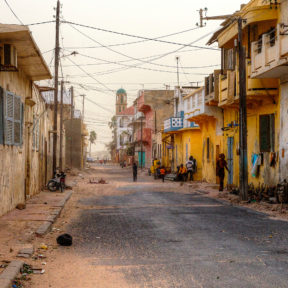
Case Study: Senegal
Senegal offers an example of relatively strong integration of environmental goals into community-level development planning. The Local Leadership Excellence Award (PNDL) and Community Development Emergency Program (PUDC) are both targeted at poverty alleviation, but also provide frameworks for decreasing environmental risk and improving resource efficiency. This environmentally aware approach has been continued in the evolving Emerging Senegal II (PSEII) national development plan.

Case Study: South Africa
South Africa’s world-famous ‘Working for’ initiatives have pioneered an inclusive approach to job creation and environmental conservation for water, forests, coasts and ecosystems. These programmes provide around 50,000 jobs every year for economically marginalised groups – including young people, disabled people, and those living with HIV/AIDS – in land conservation and environmental management activities. Job quality remains relatively low and the programme requires up-scaling and funding, but the approach has been influential in demonstrating the effectiveness of policies with specific environmental and social objectives.